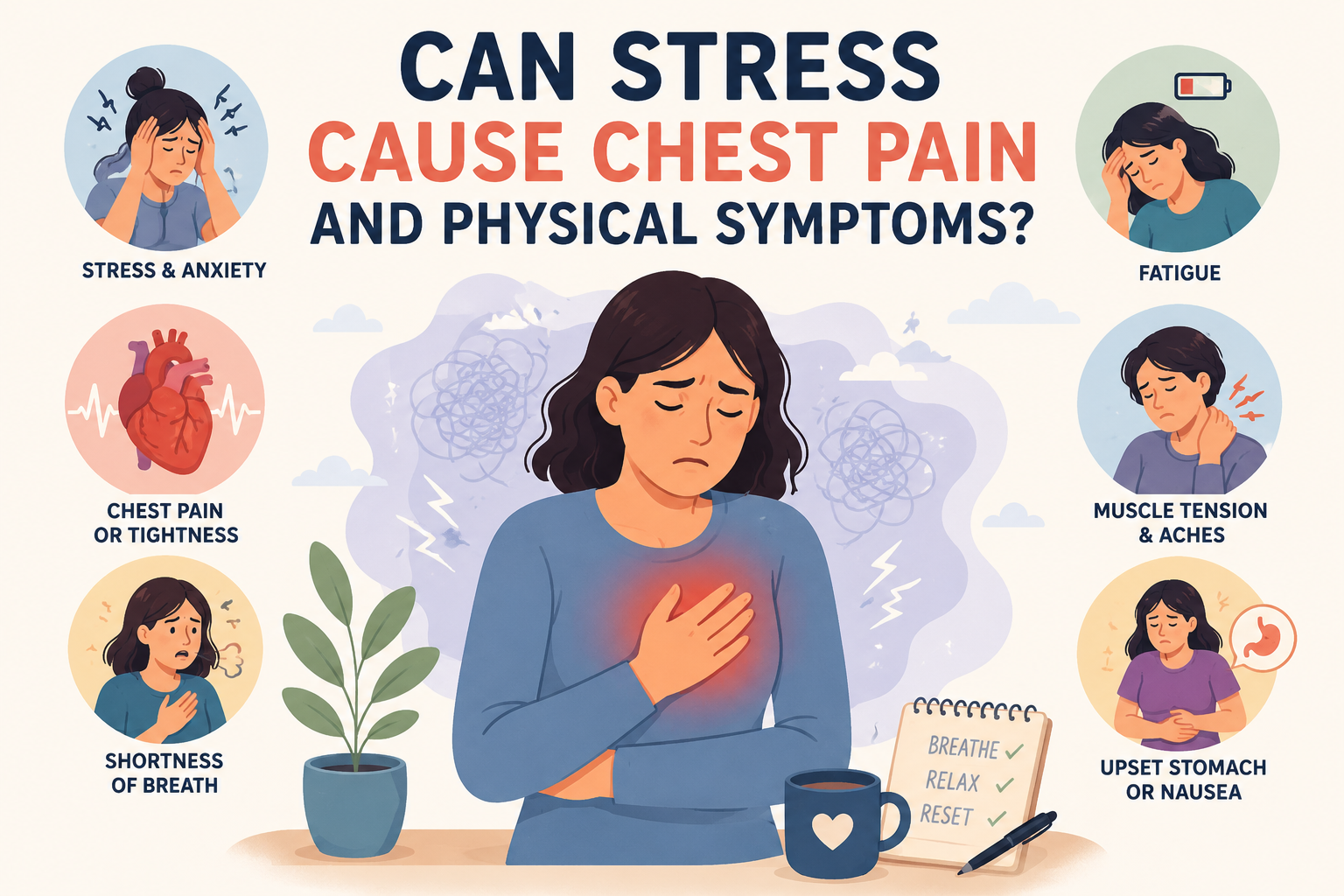
Stress can absolutely cause chest pain and a wide range of body symptoms—even when there’s no heart condition present. When your body stays in “fight-or-flight” mode, stress hormones can increase heart rate, tighten muscles, change breathing patterns, and create sensations that feel alarming. According to the American Psychiatric Association’s report, 48% of Americans reported feeling more anxious than the previous year, showing how widespread emotional strain has become. Once your symptoms are interfering with your daily routine, you may want to consider getting professional help and exploring mental health treatment to deal with the emotional and physical impact. Maryland Behavioral Health provides assistance to individuals who are dealing with anxiety, stress, and emotional fatigue.
Key Takeaways
- Stress may lead to chest pain, muscle tension, dizziness, and digestive-related issues.
- Usually, physical manifestations of stress appear on the body before one realizes their mind is under stress.
- Make sure to get the doctor’s opinion on continuous symptoms to check if there are any physical health issues.
- Treating a mental condition properly can prevent the come back of stress-related symptoms.
- Therapy, learning new coping techniques, and changing one’s lifestyle are the main components of long-term healing.
Why Stress Can Feel Physical
Stress isn’t only something you think—it’s something your body experiences.
When stress switches on your nervous system, adrenaline and cortisol are released by your body. While these substances provide you with a quick response capability, the chemicals also produce observable physical changes in your body. Increased tension in the muscles may occur along with higher breathing and heart rates.
Over time, chronic stress can create headaches, fatigue, stomach issues, tension, and chest discomfort. Experts continue to identify stress as a major contributor to both emotional and physical health concerns.
Many people become concerned because these symptoms feel intensely real—and they are. The body and mind are deeply connected.
Can Mental Health Treatment Help Reduce Stress-Related Chest Pain?
If you’ve ruled out the medical reasons for your symptoms, a structured mental health treatment could be your best bet in the long run for focusing on stress and getting your recurring symptoms under control.
Treatment approaches may include:
- Cognitive behavioral therapy (CBT)
- Stress management techniques
- Anxiety-focused counseling
- Sleep improvement strategies
- Emotional regulation tools
- Mindfulness-based interventions
At Maryland Behavioral Health, the idea behind the treatment is to expose the way emotional pressure may lead to changes in the body and consequently, to the development of symptoms, which then requires healthier response patterns.
Common Physical Symptoms of Stress You Should Know
Many people are surprised by how extensive the physical symptoms of stress can become.
Some common signs include:
- Chest tightness or chest pain
- Rapid heartbeat or palpitations
- Shortness of breath
- Neck and shoulder tension
- Digestive discomfort
- Headaches
- Fatigue
- Trouble sleeping
- Dizziness
- Jaw clenching
Stress-related symptoms may appear suddenly during periods of overwhelm or build gradually over time.
Since these symptoms may be signs of a medical condition, any symptoms that persist or worsen should be seen by a healthcare professional.
When Chest Pain Should Never Be Ignored
Although stress can contribute to chest discomfort, not every case is stress-related.
Seek immediate medical attention if chest pain occurs with:
- Fainting
- Severe shortness of breath
- Pain spreading to the arm, jaw, or back
- Sudden sweating
- Persistent pressure in the chest
- New or unexplained symptoms
After medical evaluation, if symptoms continue and stress appears connected, ongoing mental health treatment may become an important next step.
How to Manage Stress Before It Shows Up in Your Body
You don’t need to wait until symptoms become overwhelming.
These habits may help lower stress intensity:
- Create recovery time each day
Short periods of rest signal your nervous system to slow down.
- Improve sleep consistency
Insufficient sleep and stress usually get each other in a vicious circle.
- Move regularly
Going for a walk, doing some light exercises or engaging in moderate activities help alleviate bodily stress.
- Reduce constant stimulation
Don’t give in to unending phone notifications, multitasking, and information flooding.
- Talk with a professional
When symptoms become persistent, professional support can provide tools that self-help alone may not.
Many people experiencing recurring physical symptoms of stress discover that treatment focused on emotional health improves physical comfort as well.
Maryland Behavioral Health supports individuals who want practical strategies for managing anxiety, burnout, and chronic stress before symptoms become more disruptive.
Why Mental Health Treatment Matters for Whole-Body Wellness
Stress is not “just in your head.” Emotional overload can affect breathing, muscle tension, sleep, energy, and even how your chest feels throughout the day.
Mental health treatment is a very effective professional approach to locating the recurring patterns of problems, building solid coping mechanisms, and ensuring the patient’s well-being that lasts for a long time. At maryland behavioral health, with individualized therapy, people can strive for a solution that nurtures both their mental and physical states.
Conclusion
Chest pain and other body sensations can sometimes be linked to stress, especially when the nervous system remains activated for long periods. Understanding the connection between emotions and physical symptoms allows people to respond earlier and more effectively. If the symptoms continue even after medical check-up, seeking mental health treatment through maryland behavioral health may prove to be a major aid in achieving a good state of mentality and physical health.
FAQs
Q1. Can stress really cause chest pain?
Ans: It is quite possible for stress to cause chest pain. When stressed, our muscles get tense, the heart rate rises and the way we breathe changes, all of which may result in the feeling of pain in the chest.
Q2. What are the most common physical symptoms of stress?
Ans: The most typical physical signs of stress are headaches, tiredness, a feeling of tightness in the chest, upset stomach, muscle strain, and sleeping issues.
Q3. How do I know if chest pain is stress or something medical?
Ans: It’s essential to have chest pain checked by a doctor first. After physical reasons have been tested and excluded, then it may be the time that stress is discussed.
Q4. Can therapy reduce stress-related physical symptoms?
Ans: Therapy together with planned care can very often enable individuals to take control of their triggers and decrease the intensity of their body’s stress reaction.
Q5. When should I seek professional help for stress?
Ans: When stress symptoms become a regular occurrence, are so severe that they disrupt the running of your life, or persist despite efforts at self-care, it might be time to consider getting professional help.