In case the intensity of your anxiety increases after the dusk, you shouldn’t think that it is just your imagination. There are numerous people who face the situation when their anxiety becomes more pronounced in the evening as a result of lack of distraction, free time for contemplation and other physiological changes. This experience can make it harder to fall asleep and leave people feeling emotionally exhausted the next day. For individuals searching for Mental health services Maryland, understanding why anxiety tends to peak at night is often the first step toward meaningful support. Maryland behavioral health helps people who want to decrease anxiety and become a more effective manager of their emotional health.
According to CDC research, 19% of all adults that answered the survey said they had been diagnosed with an anxiety disorder and that 12% of adults in the U.S. feel worried, anxious or nervous most of the time. Anxiety remains one of the most common mental health concerns nationwide.
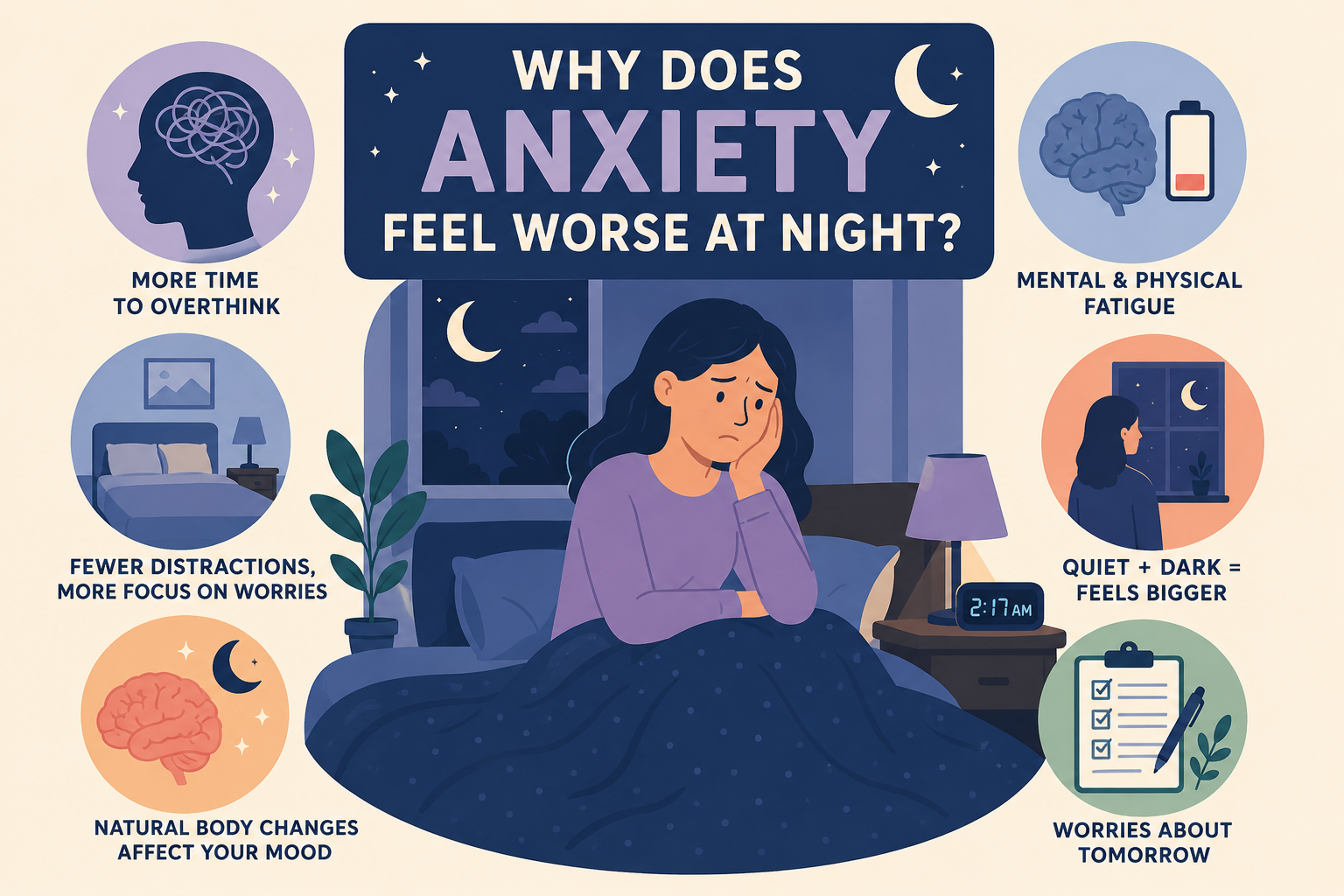
Why Does Anxiety Feel Worse at Night
Anxiety does not necessarily increase at night—but your awareness of it often does.
Throughout the day, work, responsibilities, notifications, conversations, and movement are all elements that keep the brain active and busy. When the environment turns quiet, the thoughts that were kept in the background suddenly become more and more noticeable.
Below are the factors that contribute to this shift:
1. Fewer Distractions Mean More Mental Space
During the day, your attention is divided among tasks and people. At night, there is less external input, so the mind turns inward.
Therefore, even if you experience the same amount of stress during the day, your nighttime anxiety makes everything seem more dramatic. This is why night anxiety may seem so overpowering to you.
2. Physical Fatigue Makes Emotions Feel Heavier
Mental exhaustion lowers your ability to manage worry effectively.
You should know that after a long day, your brain will have fewer emotional “supplies,” that are why your worries will be felt as more urgent, dramatic, or difficult to get out of your head.
3. Cortisol and Body Rhythms Shift
Your body naturally changes throughout the evening. Energy decreases, routines slow down, and physical sensations become easier to notice.
Since the changes are most common in people with anxiety, these changes are likely to lead to more identification of the racing thoughts, muscle tensions, or the restlessness.
4. Unfinished Thoughts Surface at Bedtime
Night often becomes the first quiet moment to process:
- Work pressure
- Relationship concerns
- Financial stress
- Health worries
- Future uncertainty
Without structure or activity, the mind may try to solve everything at once.
Signs Your Night Anxiety May Need More Attention
Occasional anxious evenings are common. However, if the symptoms last for a long time and start interfering with your life, it is probably time to look for professional help.
Watch for patterns such as:
- Trouble falling asleep several nights each week
- Racing thoughts that continue for hours
- Feeling tense even when nothing specific is wrong
- Avoiding bedtime because of worry
- Exhaustion affecting work or relationships
If you start having these experiences more and more, you may want to consider structured anxiety treatment that can help you with your symptoms and also help you to get back to normal functioning.
Practical Ways to Reduce Nighttime Anxiety
You do not need a perfect evening routine to feel better. Small adjustments can make a meaningful difference.
- Create a Mental Shutdown Routine
Spend 10 to 15 minutes right before sleep writing down your unfinished tasks or worries. That way, your brain gets the message that it does not have to keep going over them overnight.
- Reduce Stimulation Before Sleep
Light from screens, scrolling endlessly, working late can keep the mind active.
Opt for more relaxing activities like reading, doing some light exercises, or listening to something soothing.
- Avoid Turning Bedtime Into Problem-Solving Time
If after turning off the lights your mind is busy going over your every decision in life, gently divert the attention to breathing, body awareness, or grounding tasks.
- Build Consistent Sleep Habits
Sleeping and waking at the same times most days contributes to the regulation of internal rhythms and the diminishment of the intensity of nighttime anxiety.
- Consider Professional Support
When worry keeps you up often and starts to impact your functioning during the day too, a professional can help uncover the patterns and come up with coping mechanisms that work in the long run.
For people exploring Mental health services Maryland, Maryland Behavioral Health offers support focused on emotional wellness and personalized care options.
How Anxiety Treatment Can Help
Many people wait until symptoms feel severe before reaching out.
Effective Anxiety treatment often focuses on helping individuals:
- Understand anxiety triggers
- Build healthier thinking patterns
- Improve emotional regulation
- Develop sleep-supportive habits
- Strengthen resilience during stressful periods
A person’s mental health condition can always benefit from the support of a competent therapist, even if it does not fully eliminate one’s stress.
If persistent nighttime anxiety has become an ingrained habit for you, going for advice now can stop your symptoms from taking over your life even more.
For individuals seeking Mental health services Maryland, maryland behavioral health provides resources designed to support emotional health and long-term wellbeing.
Key Takeaways
- Anxiety seems to be worse at night because distractions decrease and emotional awareness increases.
- Further, fatigue and evening body rhythms probably make stress feel more intense at night time.
- If this problem of sleep disruption continues, it may be time to seek professional help.
- One of the ways to help reduce the anxious thoughts before bed is by creating a healthy evening routine.
- Getting treatment for Anxiety early is one way to get better both sleep and overall quality of life.
Conclusion
Feeling more anxious at night is a common experience, but it should not become something you simply accept as normal. Anxiety fluctuates based on your circumstances, so knowing what keeps you up will help you deal with and work through it. If symptoms continue interfering with rest, daily responsibilities, or emotional well-being, then mental health services in Maryland could be a useful option. Maryland Behavioral Health assists individuals who want to learn more about anxiety and develop a healthy way of living.
FAQs
Q1. Why does my anxiety only appear during the night?
Ans: Nighttime often cuts out all distractions, giving your mind more space to dwell on anxieties that were hidden during the day.
Q2. Is night anxiety an indication of an anxiety disorder?
Ans: Not necessarily. It is normal to have such episodes once in a while, but if anxiety is significantly affecting your sleep and causing you distress, you should consider getting evaluated.
Q3. Does lack of sleep increase anxiety?
Ans: It does. Sleep difficulties and anxiety can get so intertwined that they keep each other going.
Q4. What kind of Anxiety therapy is effective for night anxiety?
Ans: This might consist of counseling, application of behavioral strategies, sleep habits modifications, and personalized mental health services.
Q5. How do I know if it is time to ask a professional for help?
Ans: When anxiety is a constant factor that is affecting your sleep, focus, work or even your relationships, a mental health professional advice can be very useful after that.