Anxiety and stress can feel overwhelming, especially when they arise unexpectedly in daily life. Grounding techniques are quick exercises that help bring your mind back to the present and calm the body. One popular grounding trick is the 3-3-3 rule, which simply asks you to name 3 things you see, 3 things you hear, and 3 things you can touch or move. By focusing on these sensory details, the 3-3-3 rule redirects attention away from panic. As Calm’s blog explains, “Naming 3 things you see, touch, and hear can help shift focus away from anxiety and back to the present moment”. In other words, you ground yourself in the here-and-now instead of spiraling into worry. This process literally calms the nervous system – Calm notes that the 3-3-3 method “works by calming your nervous system, enhancing mindfulness, and restoring emotional balance”. In short, using simple grounding techniques for anxiety like the 3-3-3 rule is a practical way to manage stress when it strikes.
Understanding the 3-3-3 Rule
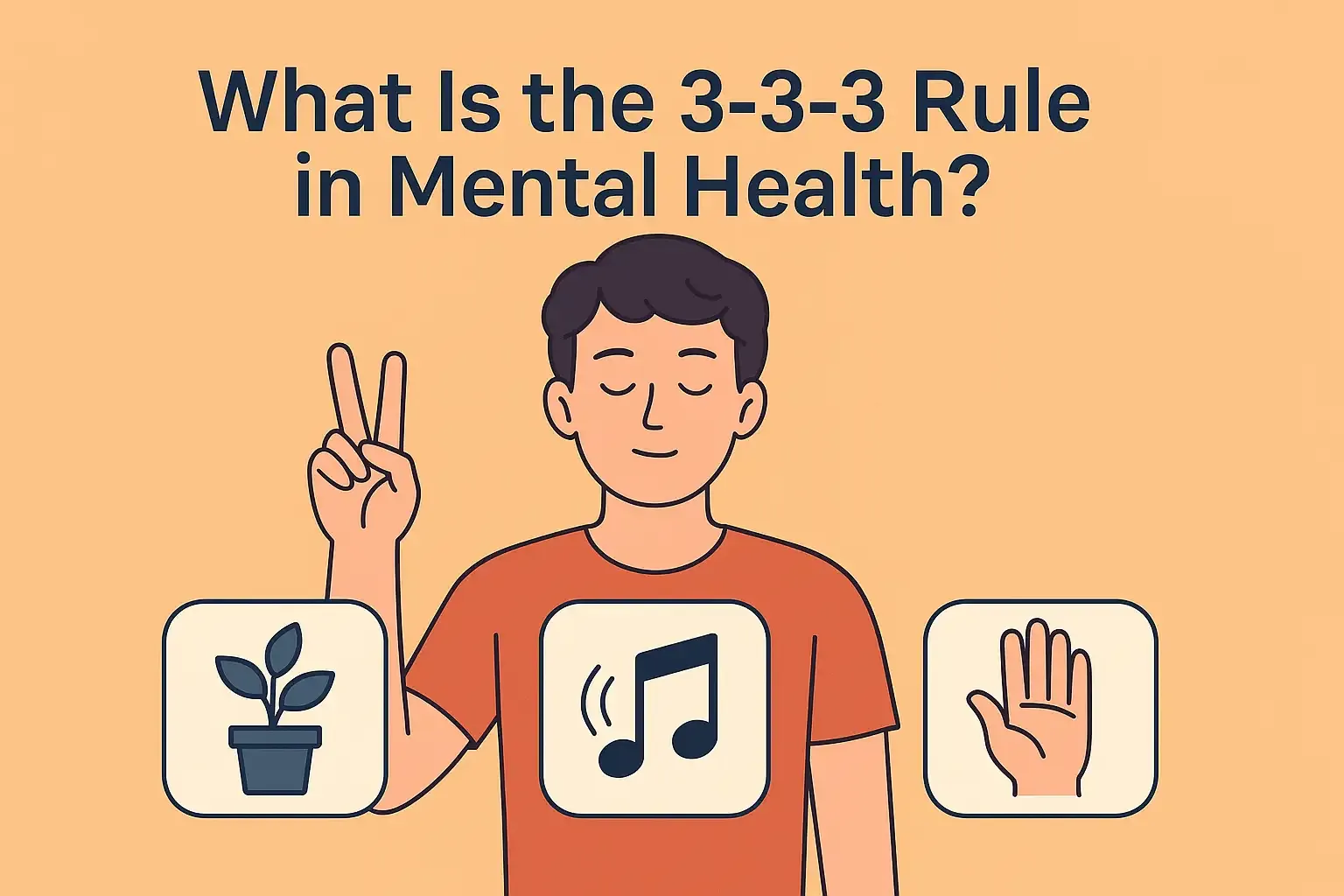
The 3-3-3 rule is a straightforward anxiety-coping exercise. It’s a form of sensory grounding: by listing things you see, hear, and feel, you pull yourself into the present. As one guide puts it, this technique “helps manage anxiety by redirecting focus to the present moment through sight, sound, and movement”. To break it down, you do the following:
- See: Look around you and pick any three visible objects – it could be a plant, a book, the sky, or anything in your immediate environment.
- Touch/Move: Notice three things you can feel or move. This might mean touching the fabric of your clothing, running your fingers over a table’s texture, or even giving yourself a gentle stretch (like rolling your shoulders or wiggling your toes).
- Hear: Finally, listen carefully and identify three different sounds. Examples could be birds chirping, the hum of a fan, distant traffic, or the sound of typing on a keyboard.
By completing each step, you actively anchor yourself to the here-and-now. The practice forces your mind away from anxious thoughts. In fact, mental health experts say focusing on these sensory details “interrupts the cycle of anxiety,” helping you regain a sense of control. In essence, the 3-3-3 rule is one of many grounding techniques for anxiety that takes your attention out of your head and into the world around you.
How to Use the 3-3-3 Rule
Putting the 3-3-3 rule into action is easy and can be done anywhere. Follow these steps when you feel anxious or need a quick reset:
- See 3 things. Look around and name three things you can see. Describe each one to yourself (for example, “a red pillow, a green plant, a yellow book”). This simple act of naming objects connects your mind to your surroundings.
- Touch/Move 3 things. Identify three things you can touch or physically move. You might touch your hair, press your fingers into your palms, or squeeze a stress ball. You could also move parts of your body (like wriggling your toes or rolling your ankles) to feel the movement. Paying attention to texture or movement brings awareness into the present.
- Hear 3 things. Close your eyes or stay open – either way, listen for three distinct sounds. This could be anything: the ticking of a clock, a car driving by, birds outside, or even your own breathing. Noticing sounds helps steady your mind because it engages your auditory senses and “anchors yourself in the present moment,” as described by therapists.
Each step only takes a few seconds. The power comes from slowing down and really noticing your environment. Over time, this practice trains your brain to shift focus when anxiety comes on.
Benefits of Grounding Techniques
Why bother with grounding? These simple exercises offer several benefits for daily mental health management. First, they provide immediate relief during an anxiety spike. By engaging your senses, grounding literally calms the body: it activates the parasympathetic (relaxation) nervous system and reduces the body’s stress response. In practical terms, this can lower your heart rate and ease tight muscles. Calm’s guide notes that using the 3-3-3 rule can “provide relief from anxiety attacks and help you regain control over your emotions and thoughts”. In other words, it’s a quick way to stop panic from spiraling out of control.
Grounding also builds mindfulness. Each time you practice, you strengthen your awareness of the present. As Calm points out, routinely doing the 3-3-3 exercise can bring “mindfulness and presence” to your state of mind. You learn to pause, observe, and just “be” without judgment. Over time, this can make you more resilient to stress because you become better at noticing anxiety early and taking action. OPA Behavioral Health similarly explains that by identifying sights, sounds, and sensations, you’re “practicing mindfulness and anchoring yourself in the present moment,” which interrupts anxious thoughts.
Finally, grounding techniques are versatile tools you can use anywhere, anytime. They require no special equipment or training, just a few conscious moments. Regular use of the 3-3-3 rule has been shown to help strengthen coping skills and emotional regulation. As OPA notes, practicing it can help you “develop stronger coping skills and improve your overall emotional regulation,” making it a valuable part of your stress-management toolkit. Think of the 3-3-3 rule as one of many ways to manage stress – other proven methods include meditation, deep breathing, exercise, and even talking therapies. For example, Harvard Health recommends relaxation exercises like meditation or yoga to activate the body’s natural relaxation response. Combined, these tools (grounding plus other healthy habits) give you a practical toolbox for everyday stress relief.
Marylandb Health: Mental Health Support in Maryland
At Marylandb Health, we understand that tools like the 3-3-3 rule are helpful, but sometimes people need extra support. Marylandb Health offers comprehensive mental health support in Maryland, including therapy, counseling, and psychiatric services. Our licensed therapists and counselors can work with you one-on-one to develop coping strategies tailored to your life. For instance, a cognitive-behavioral therapy session can help you change unhelpful thoughts (as recommended by experts), while psychiatric care can address any underlying biological factors. We’re part of the larger network of support in Maryland – resources like 211 Maryland remind us that “help is available for anyone struggling with anxiety, depression, … or stress”. Marylandb Health is here to be that “help” when you need it. Whether you’re dealing with daily anxiety or a more serious condition, our team can listen and guide you towards relief.
Get Professional Help If You Need It
The 3-3-3 rule and other grounding techniques are powerful self-help tools, but they’re just one piece of the puzzle. If anxiety or stress feels too much to handle alone, reaching out for professional help is a sign of strength. Mental health professionals at Marylandb Health are ready to assist you. They can help address the root causes of anxiety, as noted by health experts: “it’s important to get help from a therapist so you can address the root cause of your distress”. In fact, behavioral health specialists emphasize that grounding strategies “are a temporary coping mechanism and not a substitute for professional treatment or therapy”. This means while 3-3-3 can calm the moment, ongoing anxiety often benefits from therapy or counseling.
If you find yourself feeling overwhelmed, consider scheduling a session with one of Marylandb Health’s counselors or psychiatrists. We provide evidence-based treatments alongside practical tools like the 3-3-3 rule. Our caring team is here to listen, support, and work with you on ways to manage stress in your life. Remember: you do not have to face anxiety alone. Whether it’s learning grounding techniques, practicing relaxation exercises, or engaging in therapy and counseling, help is available. Marylandb Health encourages you to take that step – reach out to us if you need support managing anxiety or stress. You deserve help, understanding, and a path to feeling better.