Modern burnout does not always look dramatic. Many adults are able to continue their daily routine of working, raising children, enjoying some social time, and getting their work done while at the same time are simply running emotionally empty. As per the guardian research, more than 75% of people globally report experiencing some form of burnout, highlighting how common chronic emotional exhaustion has become. When ignored, burnout can begin affecting mood, relationships, physical health, and daily functioning. By recognizing early warning signs of burnout and pursuing appropriate treatment for mood disorders when symptoms persist, the difference made can be significant. If you have been experiencing burnout or have been experiencing any other type of mental health issues, maryland behavioral health offers both telehealth and in-person mental health and psychiatric services.
What Is Emotional Burnout?
Many people associate burnout only with work stress, but emotional burnout goes beyond having a busy schedule. It develops after prolonged emotional strain without enough recovery time. Being a caregiver, peer pressure, monetary problems, unfinished stress, and always having to be there for others are some of the factors leading to emotional burnout. Unlike temporary fatigue, burnout often changes how you think, feel, and respond to everyday situations.
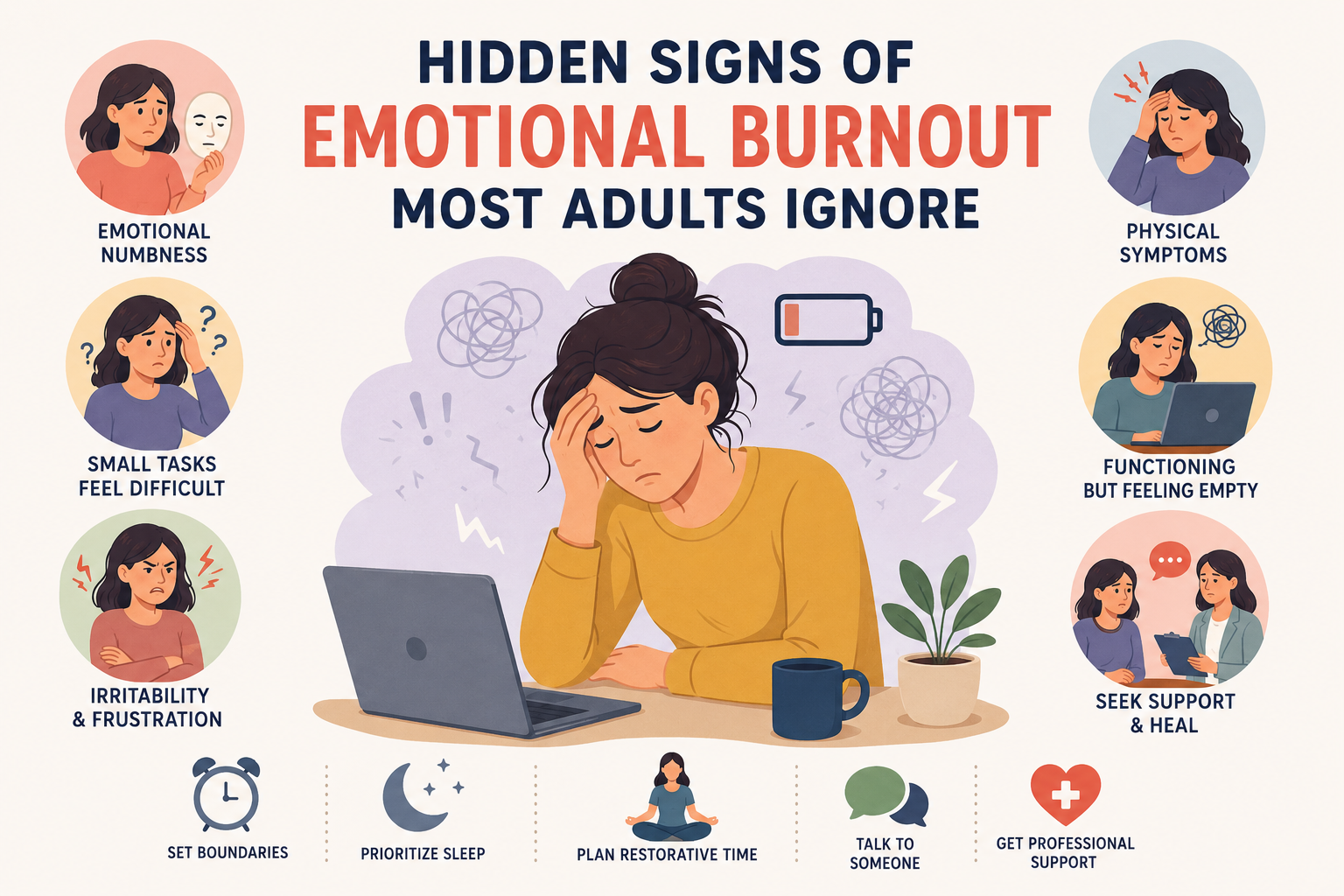
Hidden Signs of Emotional Burnout Most Adults Miss
1. You Feel Emotionally Numb Instead of Overwhelmed
One overlooked sign is not feeling “too emotional” but feeling very little at all. Activities that once felt meaningful may seem dull or disconnected.
People often describe this as:
- Going through the motions
- Losing interest in hobbies
- Feeling detached from loved ones
- Not reacting emotionally to good or bad news
2. Small Tasks Suddenly Feel Difficult
Burnout can reduce mental energy before physical energy.
You may get signs like:
- Difficulty in making even small decisions
- Inability to focus
- Not remembering schedules or duties
- Feeling drained after doing usual things
Usually, such tiredness is misinterpreted as laziness, whereas it might be a sign of a more serious emotional breakdown.
3. Irritability Becomes Your Default Setting
Many adults do not realize that burnout can show up as anger or frustration.
You may find yourself:
- Becoming impatient quickly
- Feeling annoyed by minor inconveniences
- Snapping at family members
- Struggling to regulate emotions
At that point, even simple things can turn out to be too much if emotional supplies are at empty.
4. Physical Symptoms Start Appearing
Burnout is not only emotional.
Common physical experiences include:
- Headaches
- Muscle tension
- Sleep disturbances
- Digestive problems
- Persistent tiredness
Since these physical problems can be linked with other health issues, they are often overlooked and not treated.
5. You Keep Functioning but Feel Empty
The burnout of someone who seems high-functioning is quite tricky to identify as the outer shell of a life still productive is maintained.
You may continue:
- Showing up to work
- Completing responsibilities
- Meeting expectations
But internally, motivation and satisfaction disappear. Professional support and mood disorder counseling can be helpful at this point if you are trying to identify whether your burnt out feelings are being impacted and overlap with other emotional health issues like anxiety or depression.
When Burnout Starts Affecting Mood
Burnout can sometimes create symptoms that resemble mood disorders, including hopelessness, emotional withdrawal, and persistent exhaustion. It doesn’t necessarily mean that a diagnosis is present. But, if symptoms last for several weeks or disrupt one’s ability to live normally, seeking treatment for mood disorders can be a way to better understand what is going on and to establish a suitable care plan. According to information shared by maryland behavioral health, comprehensive care may include therapy, counseling, medication management, and individualized support designed around each person’s needs.
Practical Ways to Respond Before Burnout Deepens
Recovery is rarely about taking a single day off. Small, consistent changes matter.
Consider:
- Setting work and availability limits
- Setting sleep patterns back on track
- Planning restorative activities
- Sharing your thoughts with trusted people
- Getting a professional opinion
When emotional exhaustion becomes a constant in your life and affects your quality of life, mood disorder counseling can help by offering structured support and tools. Adults feeling emotionally drained, without support, or those who find themselves in the same stressful situations may benefit from mental health services at maryland behavioral health, whose mission is to support emotional wellness, through compassionate and scientifically supported care.
Key Takeaways
- Burnout often appears quietly and can be difficult to recognize.
- People may feel emotionally disconnected; their patience runs thin and they are tired all the time.
- Emotional exhaustion may be accompanied by physical symptoms.
- Some symptoms of burnout, if persistent, may be similar to those of mood disorders.
- Initial therapeutic intervention in mood disorders, may in fact, act as a preventive measure for deeper emotional suffering.
Conclusion
Many adults ignore burnout because they believe functioning means they are doing fine. But emotional exhaustion does not always stop life—it often hides inside routines, responsibilities, and constant productivity. Identifying the signs early will give you an opportunity to get well before the symptoms worsen. When mood problems start to disrupt your life, relationships, or general health, working with a professional for the treatment of mood disorders is a good way to go. For individuals seeking compassionate care, Maryland Behavioral Health offers services focused on helping people restore balance and move forward.
FAQ’s
Q1. What is the difference between stress and emotional burnout?
Ans: Stress is generally a short-lived feeling and it is usually associated with a particular challenge. On the other hand, emotional burnout is a gradual process and results in chronic exhaustion, detachment, and a decrease in emotional capacity.
Q2. Can emotional burnout lead to depression?
Ans: Burnout and depression are two separate phenomena. Burnout can present similar symptoms, and if the situation is neglected, it can lead to increased emotional problems.
Q3. How do I know if I need mood disorder counseling?
Ans: If you are experiencing continuous changes in your mood, motivation, sleep, or emotional wellbeing that are affecting your daily life, then counseling for mood disorders might be beneficial in providing you with support and understanding.
Q4. Is burnout only caused by work?
Ans: Not necessarily. Besides work, family duties, looking after others, relationship issues, financial stress, and ongoing stress are some of the factors that may cause you to experience burnout.
Q5. What types of support are available for burnout?
Ans: Support may consist of counseling sessions, making changes in one‘s way of life, learning different ways to manage stress, and taking medications for mood disorders if symptoms go beyond emotional concerns.