Therapy has moved well beyond the traditional office visit. More people are asking their local behavior health clinic whether a video session can truly replace a face-to-face appointment, and the answer is more nuanced than a simple yes or no. Online therapy has grown from a pandemic-era workaround into a mainstream option millions of Americans now rely on for support.
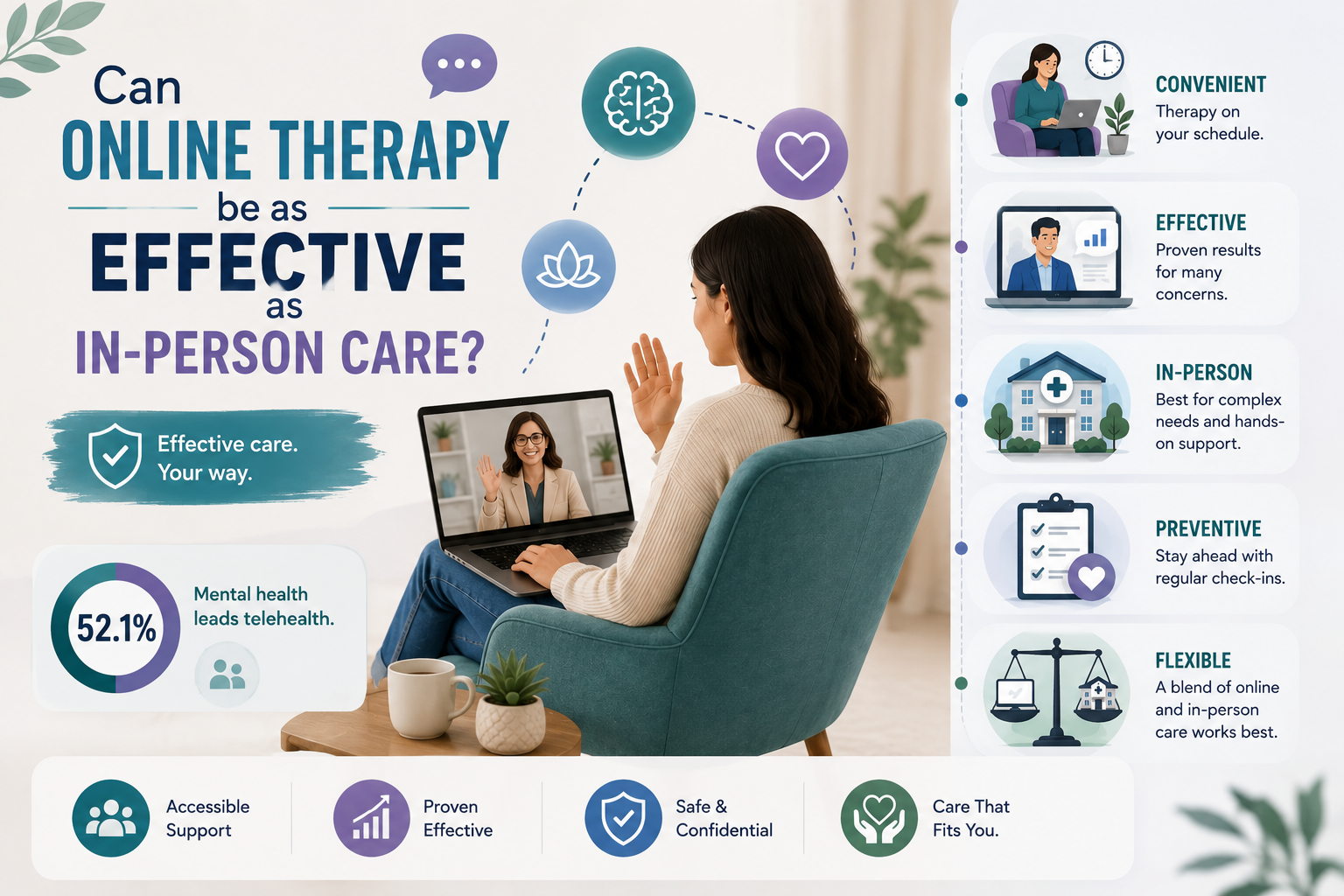
The numbers back up this shift. According to FAIR Health, a nonprofit organization that maintains one of the nation’s largest databases of private insurance claims, mental health conditions were the top diagnostic category for telehealth visits nationally, in every U.S. region, and in every age group during the first quarter of 2026. Mental health diagnoses accounted for 52.1% of all patients with a telehealth claim in that period. That growth signals real trust in virtual care, and it’s part of why practices such as Maryland Behavioral Health have built telehealth directly into everyday treatment.
What the Research Actually Shows
Clinical reviews comparing video sessions with traditional office visits generally find similar outcomes for common concerns like anxiety, depression, and stress management. Cognitive behavioral therapy, one of the most studied approaches, has repeatedly shown comparable improvement whether delivered on a screen or in a room. Satisfaction scores also run high among people who choose virtual sessions.
Effectiveness still depends on the person. Comfort with technology, the nature of the concern, and access to a private space all play a role. The person dealing with symptoms in the early-to-middle range may feel quite well by going via online sessions, meanwhile an individual with a more severe illness could find support from going to a behavioral health center physically as the added structure can provide help.
When In-Person Care Still Matters
Some situations call for face-to-face treatment. Group therapy, trauma-focused modalities, and cases involving safety concerns often need the physical presence and immediate support an in-office setting provides. A behavior health clinic can also coordinate services such as psychiatric evaluation and medication management alongside talk therapy, something harder to replicate virtually.
Care doesn’t have to be either-or. Many providers now blend formats, starting a client in person and shifting to video once a strong relationship is established, or the reverse, depending on what’s needed at each stage.
Preventive Care and Everyday Wellness
Beyond crisis intervention, online therapy suits preventive care services that keep small concerns from growing. Regular check-ins, stress-management coaching, and early screening for anxiety or depression translate well to video since they rarely require a physical exam. Removing the need to commute or arrange time off makes people far more likely to keep these appointments, which is the entire point of preventive care.
Telehealth has also closed long-standing access gaps. People in rural areas, those with mobility limits, and busy caregivers often skip appointments simply because getting to an office is hard. Virtual mental health services remove that barrier and make consistent, preventive check-ins realistic for far more people than before.
How Maryland Behavioral Health Approaches Care
Rather than treating telehealth as a one-size-fits-all replacement, Maryland Behavioral Health uses it as one option within a broader continuum of care. Clients begin with an evaluation, decide with their provider whether video sessions, in-office visits, or a mix of both suits their situation, and adjust as needs change. This reflects what research points to: setting matters less than the strength of the client-provider relationship and how well the plan fits the individual.
For people juggling work, family, or transportation challenges, having a trusted behavior health clinic that offers both formats under one roof removes a real barrier to starting care.
Choosing the Right Format
A few questions can guide the decision: Do you need hands-on support or medication management alongside therapy? Is privacy at home realistic for video sessions? Would convenience make you more likely to stick with appointments? There’s no universally “better” answer — only the option that fits your life closely enough that you’ll follow through.
Key Takeaways
- Telehealth has become a dominant method by which people have access to mental health services. More than half of those who have received telehealth services were identified as mentally ill at the beginning of 2026.
- Research shows online therapy delivers outcomes comparable to in-person sessions for many common concerns.
- Complex cases and medication management often still benefit from in-person visits.
- Telehealth has proven to be an effective tool for preventive medicine since it makes it easier for patients to maintain regular follow-ups.
- A blended approach often works better than choosing one format exclusively.
The Bottom Line
Online therapy has proven itself a genuinely effective option for many people seeking support, and the latest data confirms how mainstream virtual care has become. Still, some situations call for the structure only a behavior health clinic can provide. The most reliable path forward is working with a provider such as Maryland Behavioral Health that offers both options and helps you choose based on your needs, not a one-size-fits-all approach.
Frequently Asked Questions
- Is online therapy as effective as in-person therapy?
Regarding common psychological concerns like anxiety and depression, the studies show that the effectiveness is almost the same. It would help you to look at what you yourself need before making a decision.
- When should I choose in-person care over telehealth?
The situations involving complicated diagnoses and medical emergencies would normally warrant one’s presence physically at the hospital while medication prescriptions have to be done that way.
- Does insurance typically cover online therapy sessions?
A lot of insurance companies nowadays include telehealth for mental health visits with the same level of coverage as inpatient visits; however, that coverage may still differ from company to company and policy to policy.
- Can preventive care services really be delivered virtually?
Absolutely! Virtual services include regular checkups, health screenings, and personal coaching for wellness – most of these do not require the patient to come into a clinical setting.
- How do I know which format is right for me?
When you get a chance, you can discuss your plans, preferences for using technology and your requirements with a counselor; that is where a decision should be made about which mode would make sense.