The terms counseling, therapy, and psychiatry get used interchangeably so often that most people never learn what actually separates them — training, scope of practice, and even the legal authority to prescribe medication differ significantly between the three. That gap in understanding becomes a real problem when someone is choosing the right level of care, particularly for individuals exploring a psychiatric rehabilitation program Maryland families rely on for structured, long-term recovery rather than a single weekly appointment.
The scale of unmet need makes this distinction more than academic. According to the National Institute of Mental Health, more than one in five U.S. adults — an estimated 59.3 million people, or 23.1% of the adult population — live with a diagnosable mental illness. Roughly half of that group receives any treatment at all, meaning millions are untreated or mismatched with a provider whose training doesn’t fit their needs. That treatment gap is exactly why coordinated options like a PRP program in Maryland exist: to bridge counseling, therapy, and psychiatric care under one plan instead of three separate systems.
Counseling: Targeted, Short-Term Guidance
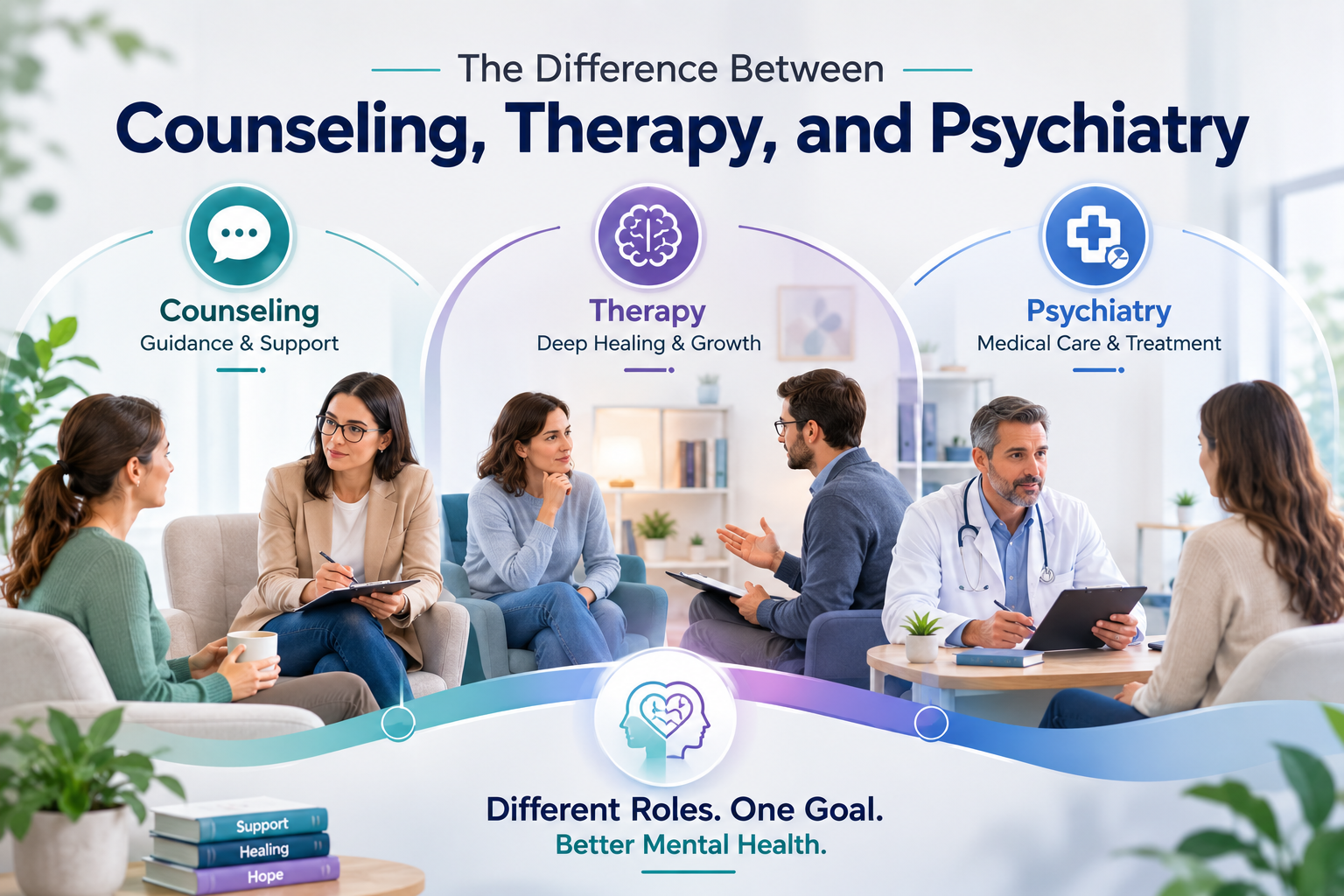
Counselors typically hold a master’s degree and state licensure (LCPC or LPC) and focus on specific stressors — job loss, divorce, grief, or adjusting to a new diagnosis. Sessions center on goal-setting and coping strategies rather than clinical diagnosis, often over weeks or months, not years. Counseling is often the first point of contact, and for many it’s sufficient. For others, it reveals patterns that require deeper clinical work, which is where a psychiatric rehabilitation program Maryland providers design for sustained, skills-based recovery becomes relevant.
Therapy: Deeper, Diagnosis-Informed Treatment
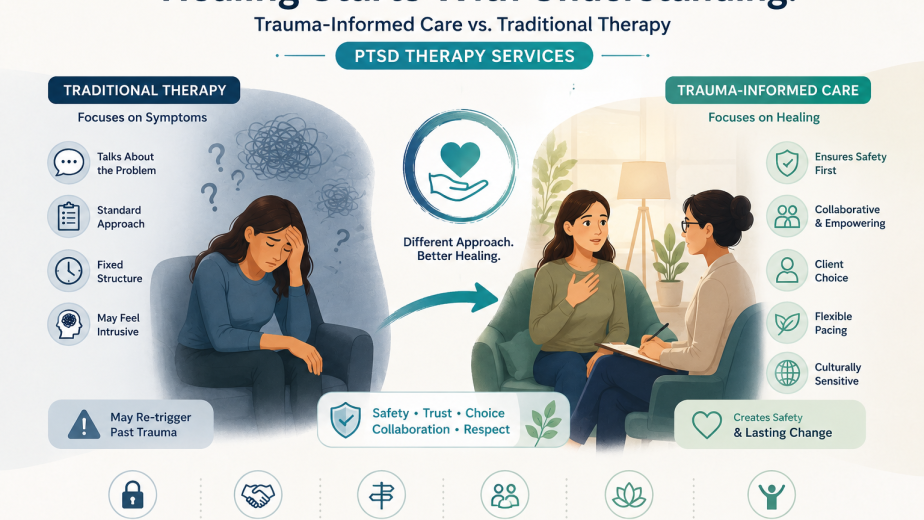
Therapy, or psychotherapy, is delivered by licensed clinical social workers, licensed professional counselors, or psychologists (PhD or PsyD). Unlike counseling, therapy is built around formally diagnosing conditions using the DSM-5-TR and applying evidence-based protocols — cognitive behavioral therapy for anxiety and depression, dialectical behavior therapy for emotional regulation, or trauma-focused CBT for PTSD. Treatment plans run longer, often months to years, reassessed against measurable symptom criteria. This is why therapy is a core piece of a PRP program Maryland residents attend, where daily living skills and psychotherapy are addressed side by side.
Psychiatry: Medical Diagnosis and Prescribing Authority
Psychiatry is the only one of the three requiring a medical degree (MD or DO) and a residency in psychiatry. Psychiatrists can order lab work, rule out physical causes of psychiatric symptoms — thyroid dysfunction can mimic depression, for instance — and prescribe medications such as SSRIs, mood stabilizers, or antipsychotics. Some psychiatric nurse practitioners share similar prescribing authority under state law. Because medication management requires ongoing monitoring, psychiatric oversight often makes the biggest difference for people with severe or persistent symptoms, which is why a psychiatric rehabilitation program Maryland clients enroll in typically includes a psychiatric provider on the care team rather than referring clients elsewhere.
Where Rehabilitation Fits Into the Picture
Psychiatric rehabilitation is a distinct service category, not just counseling, therapy, or psychiatry alone. Rather than a 45-minute weekly session, a rehabilitation program builds structured programming around functional goals: managing medications, budgeting, holding a job, and reconnecting with family or community. A well-run PRP program Maryland clients trust blends all three disciplines — a counselor for day-to-day coping, a therapist for deeper diagnostic work, and a psychiatric provider for medication oversight — with specialists who coach clients through the practical skills that turn therapy-session progress into daily life.
Maryland Behavioral Health structures its services around this integrated model, so clients aren’t left coordinating three separate providers alone. Instead of treating counseling, therapy, and psychiatry as disconnected services, Maryland Behavioral Health builds a single care plan where each discipline informs the others — particularly valuable for people in a PRP program Maryland families choose specifically to avoid communication gaps.
What to Expect From an Integrated Program
A well-structured PRP program in Maryland usually starts with a comprehensive intake assessment covering psychiatric history, current functioning, and personal goals. From there, a team — not a single provider — designs a plan that might include skills groups, individual therapy, medication management, and case management for housing or employment. Working with a coordinated team such as Maryland Behavioral Health, that information reaches every provider, not just whoever happened to be in the room that day.
Key Takeaways
- Counseling addresses short-term stress with goal-focused strategies.
- Therapy involves formal diagnosis and evidence-based protocols over months or years.
- Psychiatry is the only discipline with medical training and prescribing authority.
- Rehabilitation services integrate counseling, psychiatry, and therapy along with training functional skills.
- Multi-specialist teams working together not only help eliminate communication barriers among practitioners but also lead to faster and more efficient outcomes.
Final Thoughts
Counseling, therapy, and psychiatry each serve a distinct function, and understanding those differences helps families make faster, more informed decisions about care. The strongest outcomes typically come from combining all three within a coordinated framework rather than piecing together separate providers. For anyone researching a trusted psychiatric rehabilitation program Maryland community members recommend, Maryland Behavioral Health offers an integrated approach that keeps counseling, therapy, and psychiatric care working toward the same recovery goals.
Frequently Asked Questions
- What’s the main difference between counseling and therapy?
Short-term counseling deals with daily issues and offers practical strategies to deal with the situation. Therapy is more formal. It usually starts with diagnosing the patient’s problem, and then follows a treatment plan for quite a considerable period of time.
- Can a psychiatrist provide therapy as well?
Not all, although some psychiatrists do. They tend to be primarily involved in diagnosis and the monitoring of medications while they also refer their patients to counselors and therapists for continuous therapeutic talk-based services.
- Who benefits most from a psychiatric rehabilitation program Maryland residents can access?
People managing persistent or serious mental illness who need both clinical treatment and support rebuilding daily, social, and vocational skills.
- Is medication always required in a PRP program in Maryland?
There are cases when it is not. Some clients prefer more therapy and skills training, while others will need the support of a psychiatric provider, who will help them in the management of their medication if needed.
- How do I know whether I need counseling, therapy, or psychiatry?
A qualified professional conducting a thorough assessment will evaluate your condition, symptoms, and possibly recommend you the level of care that you require.