Anxiety, ADHD, and depression impact millions of Americans annually, and searching for the right care plan can be intimidating. For numerous families in the Mid-Atlantic region, a local psychiatric rehabilitation program available through Maryland resident services is not only a relief but a source of highly structured and community-friendly support that surpasses traditional weekly therapy sessions. Besides, these programs are also designed to support mental recovery by a multifactorial approach of skill building, peer interaction, and clinical help. Understanding how these programs fit alongside medication, talk therapy, and other treatment options is the first step toward choosing the right care for yourself or a loved one. Mental health needs remain high nationwide. According to the National Institute of Mental Health, an estimated 59.3 million U.S. adults — 23.1% of the adult population — currently live with a mental illness, yet only about half receive any treatment in a given year. This ongoing treatment gap is exactly why accessible, structured, and locally available programs matter more than ever for people managing anxiety, ADHD, and depression.
Treatment Options for Anxiety
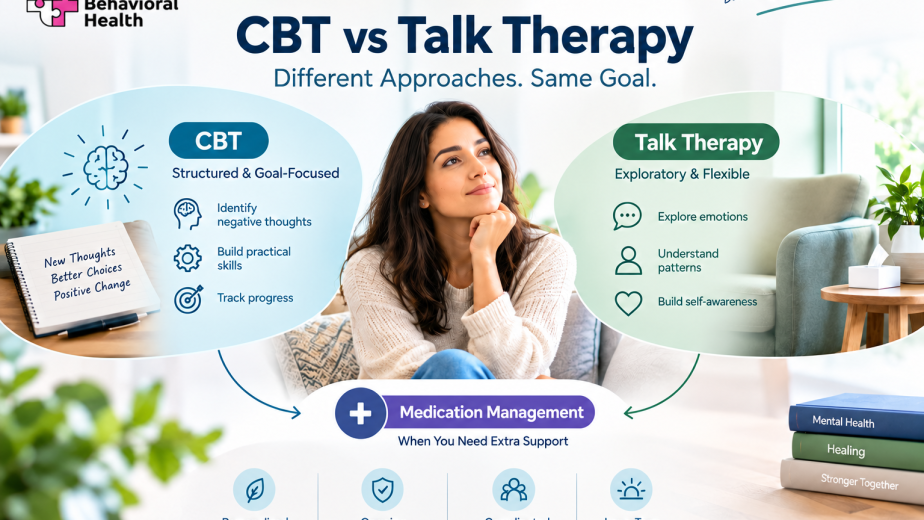
Anxiety disorders are among the most common mental health conditions, and treatment usually works best when it’s layered. Cognitive Behavioral Therapy (CBT) aids in the recognition and alteration of anxiety-provoking thoughts and behavioral patterns. Exposure-based approaches, as one might expect, gradually reduce avoidance behaviors. Moreover, the effect of a drug like SSSR is very limited if not negligible unless it’s combined with another therapy since it’s mainly for regulating the chemistry of the brain related to continuous worry and a panicked attack. If a person’s anxiety severely impairs functioning day and night, a different therapeutic path might be advised which involves a highly structured and continuous support system along clinical tools.
Treatment Options for ADHD
ADHD treatment typically blends medical management with behavioral strategies. To enhance concentration and manage impulsivity, doctors may prescribe either stimulant or non-stimulant drugs. Alongside medication, individual and family behavior therapy are used to develop habits, set-up effective systems for organization, and find suitable ways to cope with daily responsibilities. Due to the fact that ADHD commonly comes up together with anxious disorders or mood issues, the best outcomes are often achieved by the combined treatment of all three disorders rather than separate treatment of each one.
Treatment Options for Depression
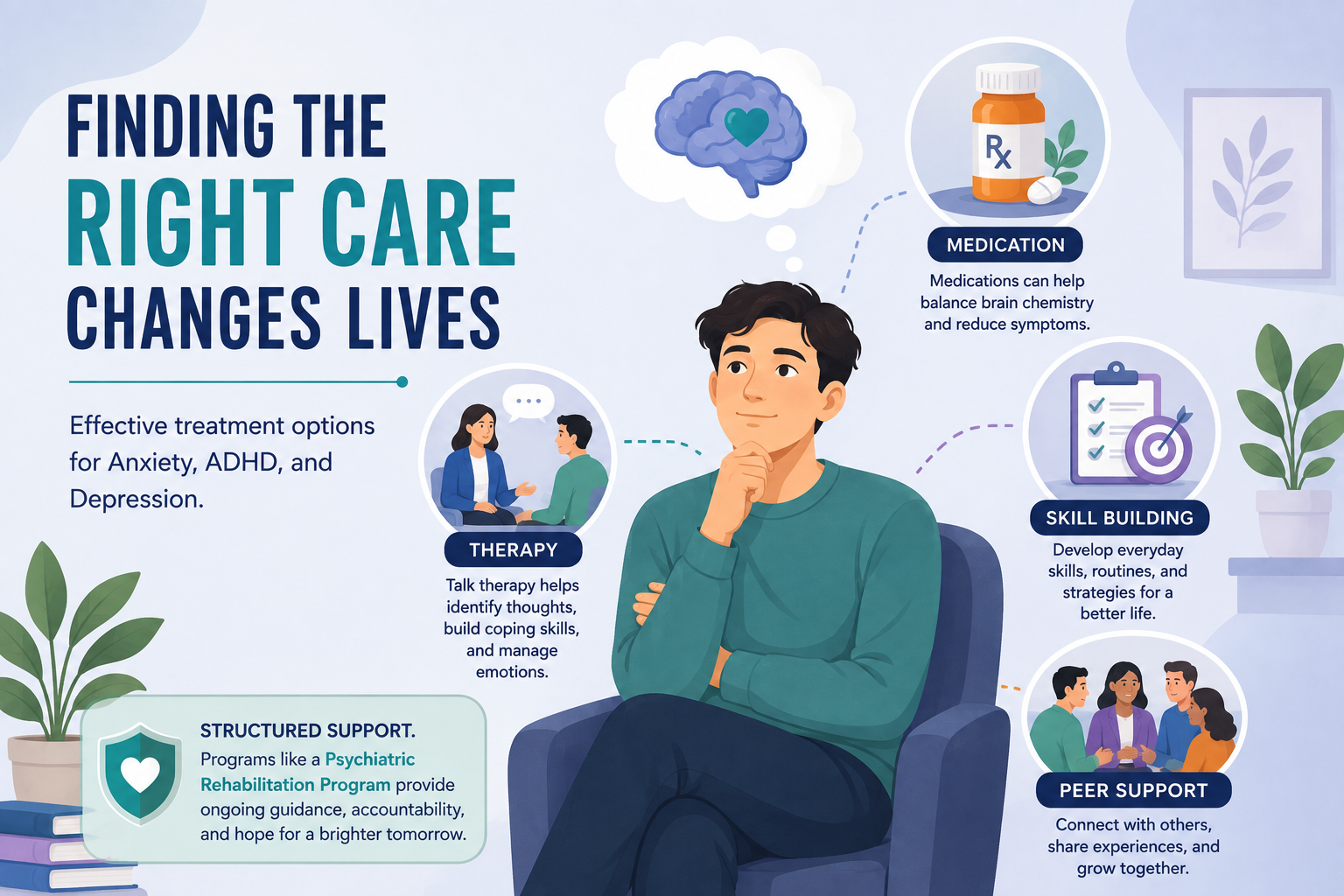
Depression treatment often starts with psychotherapy and, when appropriate, antidepressant medication. Lifestyle changes regular sleep, physical activity, and social connection — also play a meaningful role in recovery. Nevertheless, for those with more serious cases or long-standing symptoms, just regular outpatient therapy might be insufficient. A psychiatric rehabilitation program, which the Maryland doctors suggest, can indeed change things for the better; it provides a framework of ongoing physical and emotional care that helps people slowly and steadily get back to doing things independently and with confidence.
Why a PRP Program in Maryland Can Help
A PRP program in Maryland is designed specifically for individuals whose anxiety, ADHD, or depression symptoms interfere with daily living, employment, or relationships. In contrast to a single weekly therapy appointment or a few visits, a psychiatric rehabilitation program Maryland is usually offered as a family support service that involves group work along with personal skill training and regular follow-up sessions that make the individual responsible for progress between visits. This kind of structured and recurring support helps a person not only talk about, but actually practice a certain behavior every day by being in contact with others. Programs like this are especially valuable for people who have tried therapy or medication alone and still struggle with day-to-day stability. A well-run PRP program in Maryland is all about practical objectives: symptom control while working, better family communication, and routine building to achieve better overall wellness.
How Maryland Behavioral Health Supports Recovery
Maryland Behavioral Health is one option families can turn to when exploring structured psychiatric rehabilitation support. Instead of a generic way of treatment, this organization customizes its services based on each person’s diagnosis and his or her recovery goals. From dealing with anxiety or ADHD coaching to depression recovery, they support every client’s needs. For families that are not familiar with PRP program options in Maryland or are looking for a trustworthy local provider, partnering with a professional local team is a great idea that helps manage therapy, medication and daily activities all together on the same floor. Choosing between outpatient therapy, medication, and a more intensive rehabilitation program depends on symptom severity and personal preference. A conversation with a licensed provider, such as the team at Maryland Behavioral Health, can help clarify which combination of treatments fits your situation best.
Key Takeaways
- Issues like Anxiety, ADHD, and depression are most effectively treated if one goes for a mix of therapy, medication, and structured support rather than relying on one particular treatment.
- Nearly half of U.S. adults living with mental illness go untreated each year, as per the NIMH report, highlighting the need for accessible local care.
- A psychiatric rehabilitation program Maryland residents can access provides structured, recurring support beyond standard outpatient therapy.
- Most often, PRP programs that Maryland families select with group therapy include skill development and the tracking of the patient’s progress being a part of it too.
- Providers like local rehabilitation teams can help coordinate therapy, medication, and daily support in one place.
Conclusion
Ultimately, no single treatment works for everyone, which is why exploring multiple options matters before settling on a plan. Anxiety, ADHD, and depression will each have a different reaction to therapy, drugs, and lifestyle changes so the right combination of those three should be your top goal. For individuals whose symptoms go beyond what weekly therapy alone can manage, a psychiatric rehabilitation program Maryland offers a structured path toward stability, independence, and long-term wellness. Reaching out to a qualified local provider is often the simplest way to find direction and lasting support.
Frequently Asked Questions
- What is a PRP program Maryland residents can enroll in?
It is a comprehensive, community-based support program through which individuals, with or without mental health disorders such as anxiety, depression, or ADHD, can get assistance in developing their everyday living skills while receiving their treatment clinically.
- How is a PRP program different from regular therapy?
The main difference is the frequency: regular therapy sessions are generally once a week while the PRP program provides more frequent structured support like group sessions and activities which help building the required skills.
- Can ADHD be treated without medication?
It has been a successful model for a lot of people that management of ADHD may be done through behavioral coaching, the creation of routines, and also therapy; however, some people prefer to use medication together with these methods in order to get better results.
- Who is a good candidate for psychiatric rehabilitation?
People who are affected significantly by their symptoms in their work place, school, or in relationships, who have already tried standard outpatient care and still didn’t get much relief, are often considered good candidates.
- How do I get started with Maryland Behavioral Health?
Visit our website and make an appointment with the clinician to assess your condition first. They would then advise you of the most suitable treatment method to pursue.