Attention-Deficit/Hyperactivity Disorder, or ADHD, is not only a problem with concentrating while working or studying. It can quietly reshape the way people communicate, listen, and connect with the ones they love. Many women, who are already juggling between work and raising a family and keeping their relationships going, experience a partner’s/their own symptoms of ADHD as a kind of friction at home that is very hard to verbalize and even harder to explain. This is exactly where counseling services for women come in, helping couples understand what’s really happening beneath the surface of their arguments.
As per Huntington research on adult ADHD statistics found that roughly 6.0% of U.S. adults, or about 15.5 million people, currently live with an ADHD diagnosis, and many describe real strain in their closest relationships as a result. As more adults recognize these patterns in themselves, more couples are also reaching out for guidance to communicate better and repair the disconnect ADHD can cause.
How ADHD Shows Up in Everyday Conversations
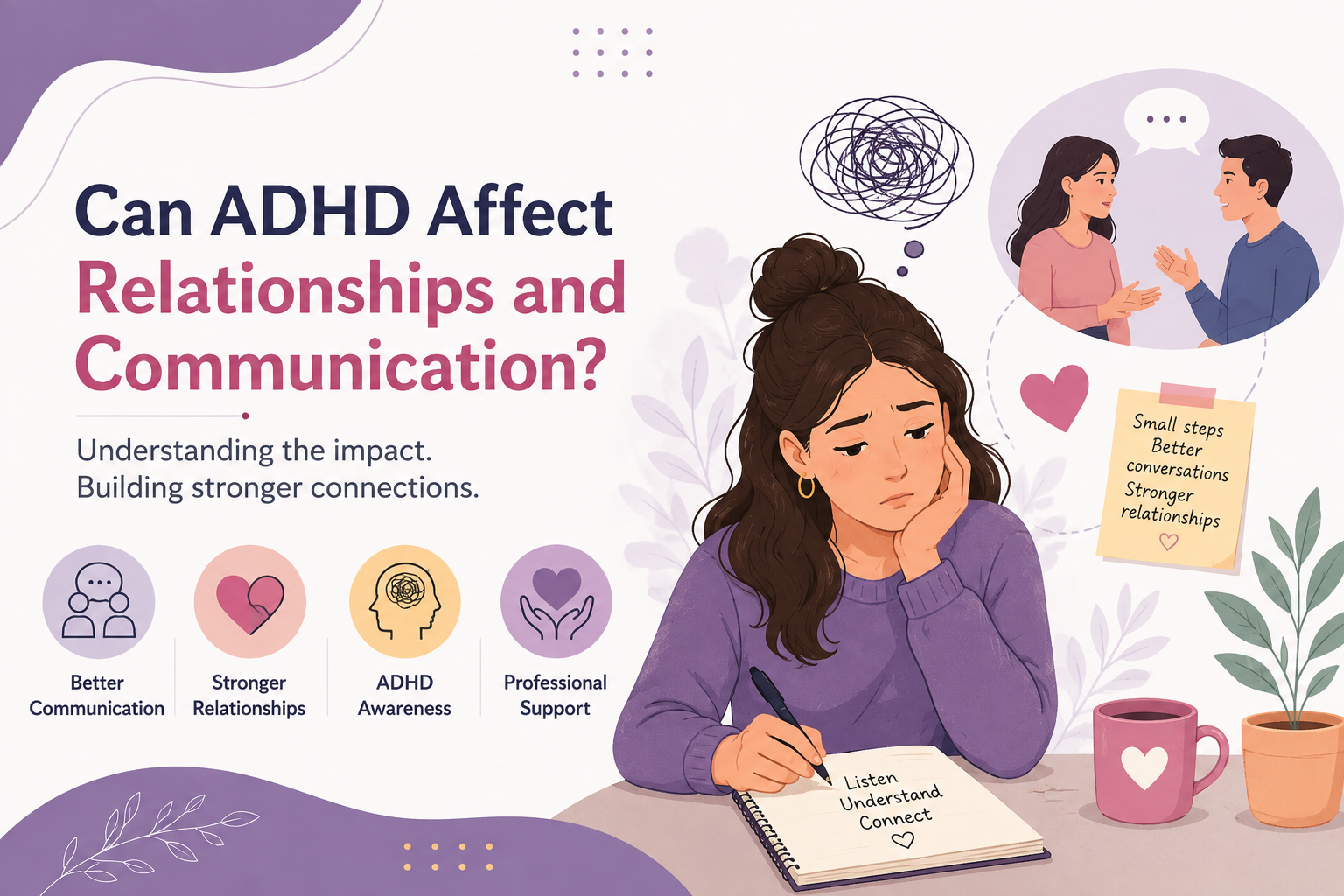
ADHD can affect communication in ways that are easy to misread as carelessness or indifference. A partner with ADHD may unintentionally interrupt the other person, be lost track of the conversation mid-sentence, or even forget a commitment made days ago. Over time, the other partner may start to feel unheard, dismissed, or like they’re constantly repeating themselves. None of this stems from a lack of love or effort it’s tied to how the ADHD brain manages attention, working memory, and impulse control, and understanding that difference is often the first step toward change.
The Emotional Toll on Women in Relationships
Women often end up shouldering the invisible labor of managing a household, tracking schedules, and smoothing over social plans, and this imbalance tends to grow when a partner has ADHD. Over time, this can lead to resentment, burnout, and a quiet erosion of intimacy. It’s a major reason more women are turning to counseling services for women to find a dedicated space to process the exhaustion of feeling like a manager instead of a partner, rather than carrying that weight alone. This same pattern is part of why women’s mental health services have seen rising demand across the country in recent years.
Why Professional Support Makes a Difference
Working with a therapist trained in ADHD-related relationship dynamics can help both partners see the pattern rather than blaming each other for it. Counseling services for women, in particular, provide a forward-looking opportunity to unpack the burdens of caregiving, communication problems, and disappointments without judgment. At Maryland Behavioral Health, therapists work with couples and individuals to build communication strategies that account for how ADHD actually affects the brain, rather than treating symptoms as personal failings. Reaching out for support isn’t a sign of a failing relationship — it’s a proactive step toward understanding, repair, and long-term stability.
Building Better Communication Habits Together
Beyond formal therapy, small structural changes can ease day-to-day friction: written reminders instead of verbal ones, scheduled check-ins instead of on-the-spot conversations, and active listening practices that slow conversations down before they escalate. Many providers focused on women’s behavioral health also recommend couples’ workshops that teach these skills in a low-pressure, guided setting. Maryland Behavioral Health offers exactly this kind of structured, judgment-free support for couples navigating ADHD together, giving both partners practical tools they can use at home.
Key Takeaways
- ADHD can affect communication through interruptions, forgetfulness, and distraction — not a lack of care.
- The “management” aspect of a relationship is most of the times left to the woman, who may feel quite a burden. If a partner has ADHD, the situation may become even tougher for the woman.
- A 2026 report found that roughly 15.5 million U.S. adults live with ADHD, many reporting real relationship strain.
- Counseling services for women and Couples can help them see conflict as a cooperative puzzle to solve rather than a battle to be won.
- Tiny lifestyle changes like using written reminders, planning regular catch-ups and being fully present while others are talking, are the things that one can do to help keep conversations going on over the years.
- Local women’s behavioral health providers can offer both individual and couples-focused support tailored to these challenges.
Conclusion
ADHD doesn’t have to define or derail a relationship, but ignoring its impact on communication rarely makes things easier. Understanding how ADHD affects attention, memory, and emotional regulation gives couples a clearer, kinder way to talk about what’s really going on. Whether through structured habits at home or professional counseling services for women and their partners, support is available — and reaching for it is often the turning point that helps both people feel heard again.
FAQs
- What are common signs ADHD is affecting my relationship?
Frequent repeated conversations, forgotten commitments, feeling unheard, and an uneven split of household responsibilities are common early signs, and they’re often what first prompts someone to look into women’s mental health services.
- Can therapy really help couples affected by ADHD?
Undoubtedly, therapy is one of the most effective ways of helping a couple deal with ADHD challenges on their relationship. It will help you learn communication techniques that are both realistic and practical, from a therapist, a person who knows about ADHD.
- Is ADHD’s impact on relationships different for women?
Certainly, it’s likely that you’ll find out that your experience is somewhat unique when compared to men. You may even have felt that it was more of a burden to be a care-giver, and a housewife.
- How can I start communicating better with an ADHD partner?
Try taking small steps: employ text messages as a tool for communicating, organize the moments for regular conversations beforehand, and try engaging in conversations slowly. Maryland Behavioral Health has been helping couples like yourself come up with relationship plans that are specific to their needs.
- Where can women find support for ADHD-related relationship stress?
Besides individual therapy, some mental health clinics such as Maryland Behavioral Health offer couple’s therapies that are specially adapted to the problems related with ADHD.