If you’ve ever walked into a room and forgotten why, lost your train of thought mid-sentence, or felt like your brain is moving through molasses, you’ve likely experienced brain fog. It isn’t a medical diagnosis on its own it’s a cluster of symptoms that includes forgetfulness, mental fatigue, and trouble concentrating. For many people, the first real step toward relief starts with comprehensive health testing that can rule out underlying medical causes before symptoms get worse.
A growing body of research shows just how common this problem has become. As per the research from the Ovid found that among people who had long COVID, the pooled prevalence of brain fog reached 30 percent, with related cognitive impairment affecting roughly one in four patients. That means millions of adults are navigating daily life with reduced mental clarity, and many never find out why. At Maryland Behavioral Health, our providers regularly meet patients who describe this exact experience: a mind that feels slower, hazier, or less sharp than it used to be.
Key Takeaways
- Brain fog is a symptom cluster, not a formal diagnosis, marked by forgetfulness, fatigue, and poor concentration.
- As per study from the ovid found brain fog affects roughly 30% of people recovering from long COVID.
- Cause-wise it varies from a lack of sleep and constant stress to hormonal changes, deficiencies in nutrients, and diseases if not dealt with timely.
- Comprehensive health testing helps pinpoint the root cause instead of just masking symptoms.
- Trustworthy diagnostic lab services, along with lab testing services, can catch problems like a thyroid imbalance, anemia, or vitamin deficiencies at a premature stage.
What Is Brain Fog?
Brain fog refers to the condition where brain functions temporarily decline due to a loss of clear thinking. People suffering from brain fog often describe problems with focusing and concentrating, slow brain processing, memory losses, and they feel mentally sluggish almost all the time. Sometimes brain fog is caused by bad sleep and occurs right after the sleep, sometimes it builds up progressively over several weeks, and in some cases it indicates serious health issues that need thorough examination to detect.
On its own, brain fog isn’t dangerous, but it can interfere with work, relationships, and everyday decisions. Symptoms that persist or worsen are worth discussing with a provider, especially when paired with mood changes, unexplained fatigue, or other physical symptoms comprehensive health testing is often the fastest way to sort out which one is really at play.
What Causes Brain Fog?
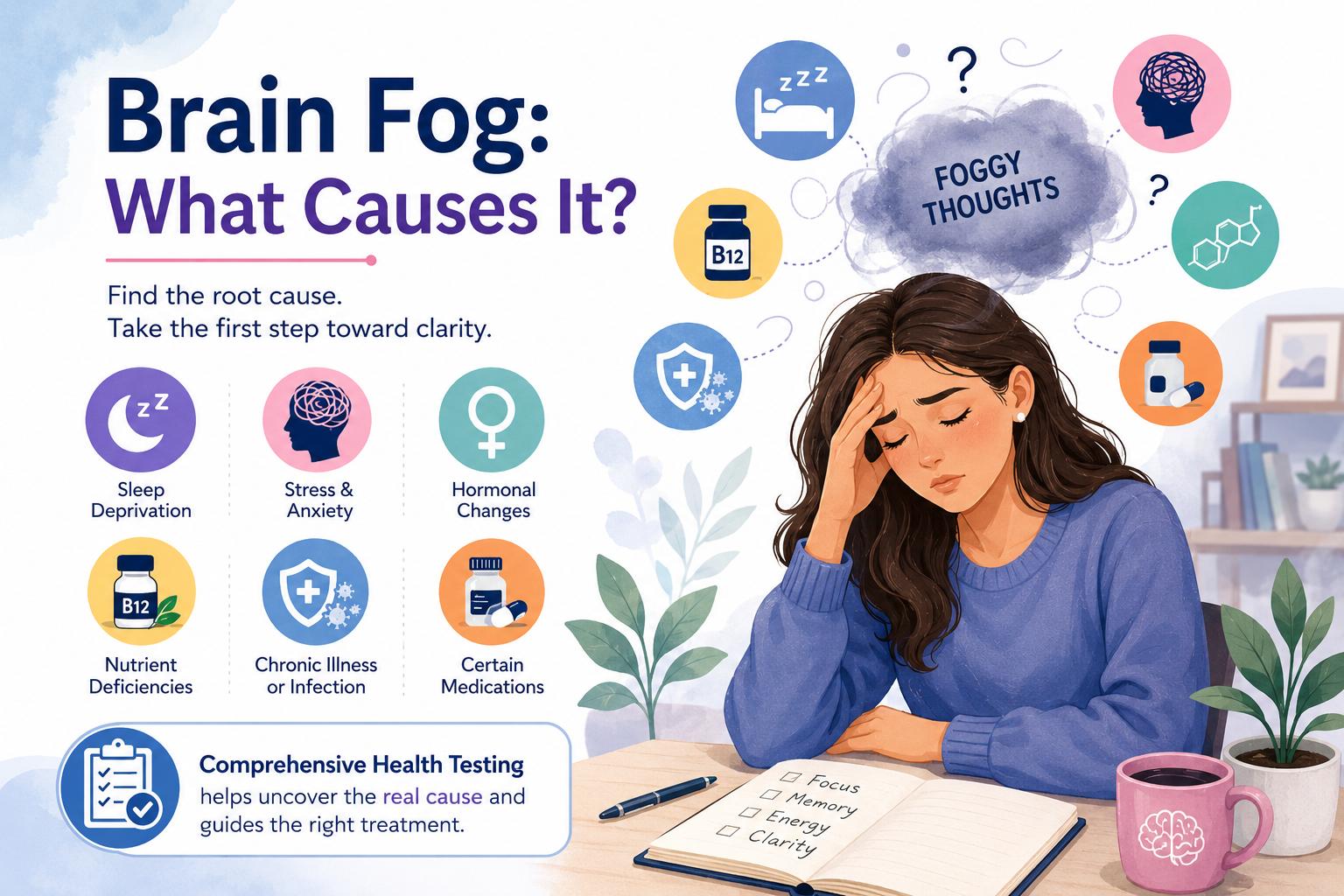
Brain fog rarely has a single cause. Common contributors include:
- Sleep deprivation: Studies have shown that people who get less than seven hours of sleep every night on average are more likely to report difficulties with their cognitive functions as well as having slower reaction times.
- Chronic stress and anxiety: Chronic stress and anxiety lead to the over secretion of the body’s stress hormones which are a cause of the deterioration of memory and the loss of focus and concentration.
- Hormonal changes: Biological changes that are associated with different stages e.g pregnancy, menopause, thyroid disorders are often a reason for brain fog.
- Nutrient deficiencies: Low levels of vitamin B12, vitamin D, or iron are directly linked to the loss of concentration and energy.
- Chronic illness or infection: Long COVID, autoimmune conditions, and untreated diabetes are all associated with lingering cognitive fog.
- Certain medications: Some antihistamines and antidepressants list mental dulling as a possible side effect.
Because these causes overlap so heavily, guessing at a fix rarely works. This is where reliable diagnostic testing services become valuable bloodwork and screenings can distinguish a sleep problem from a hormonal imbalance or a nutritional gap.
Why Testing Matters
Many people try to push through brain fog with more caffeine or sheer willpower, but symptoms usually persist until the underlying cause is treated. Comprehensive health testing allows physicians to see what is going on at the deepest level in your body, through lab results on thyroid status, blood sugar, vitamins, and inflammation markers. Consistent lab testing services can flag problems early, before they progress into more serious conditions. An undiagnosed thyroid disorder or iron-deficiency anemia can look almost identical to everyday tiredness on the surface, but each requires a completely different treatment plan.
At Maryland Behavioral Health, our family medicine team is available to do physical exams and run diagnostics while the mental health services team provides the necessary support for the whole range. So patients can come back for the complete story of their physical and emotional states with just one visit.
Getting Answers
If brain fog lasts more than a few weeks, keeps returning, or shows up alongside other symptoms like unexplained weight changes, low mood, or persistent exhaustion, it’s worth talking to a provider rather than waiting it out. A thoughtful combination of a physical exam, symptom history, and targeted lab testing services often reveals answers that guesswork never will.
Conclusion
Brain fog can feel confusing and frustrating, especially when it seems to come out of nowhere. But it’s rarely random sleep, stress, hormones, nutrition, and underlying illness all play a role, and each leaves clues that a provider can trace. Instead of resigning yourself to the mental haze, thorough examination of health is an easy and effective way to get the real story and find the treatment. If brain fog has been affecting your work, relationships, or quality of life, the team at Maryland Behavioral Health is ready to help you get to the root of it.
FAQs
- Is brain fog a real medical condition?
Brain fog is not an illness by itself, but rather a symptom one experiences, not that it is a medical condition. There can be several causes such as sleep disturbances, stress, hormones, or even an undetected illness.
- How long does brain fog typically last?
It can take different forms. Poor sleep is among the causes of occasional fog, and then the brain is cleared of such fog within a day or so. However, fog related to illness or hormonal change can linger for weeks or even months.
- Can stress alone cause brain fog?
Yes. When you are stressed for a long time, cortisol level increases which will, at some point, affect memory, concentration, and mental speed of processing.
- What tests help identify the cause of brain fog?
Certain lab tests for the level of thyroid hormones, blood sugar, vitamin B12, vitamin D and iron are generally used as a diagnostic method at the beginning by physicians.
- When should I see a doctor about brain fog?
You should consult the doctor when symptoms persist for more than a couple of weeks, when they get worse or when other symptoms like fatigue, mood change, or physical symptoms show up. To help you determine whether you need to see a doctor, come to the Maryland behavioral health team first.