You get through the day, check things off the list, talk to people, maybe even smile at the right moments. But something underneath feels switched off. No real joy, no real sadness, just a kind of static. If that sounds familiar, you’re not alone, and it’s not just “stress.” As per the south denver therapy report, young adults aged 18-29 now experience depressive symptoms at a rate of 26.7% — more than double the 13.0% rate from 2017. Numbers like that point to a much bigger pattern, one where understanding emotional numbness and getting real treatment for mood disorders has become less optional and more necessary.
Understanding Emotional Numbness and Treatment for Mood Disorders
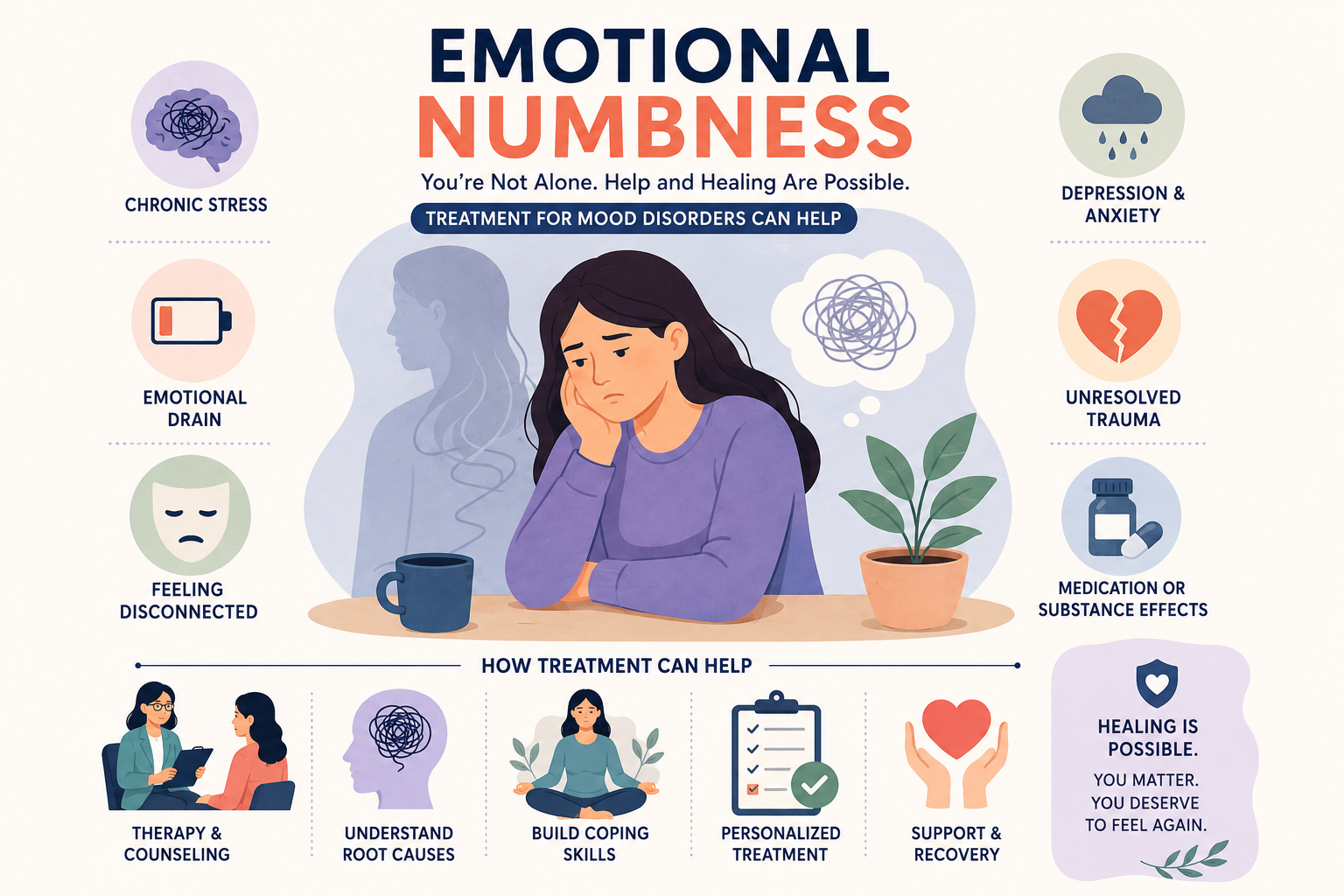
At its core, emotional numbness is a kind of disconnection. You’re physically present, but the usual emotional signals — excitement, grief, anger, affection — don’t really come through. Some people describe it as watching their own life from behind glass. Others just say they feel “flat,” like the color has been turned down on everything. It isn’t the same as being calm. Calm still has texture to it. Numbness doesn’t. What’s interesting is how often this starts as a kind of protection rather than a malfunction. After enough stress, grief, or trauma, the brain sometimes just dims the emotional dial because it’s the only way to keep functioning. That can work for a while. Eventually, though, it tends to backfire, which is usually the point where treatment for mood disorders becomes part of the conversation, since numbness often turns out to be depression, anxiety, or bipolar disorder wearing a different mask.
Common Causes Behind the Numb Feeling
There’s rarely a single cause. More often it’s a slow buildup — work pressure, caregiving responsibilities, money stress, or just never getting a real break. Add untreated depression or anxiety into that mix, or grief that never got properly worked through, and numbness starts to make a lot more sense as a response rather than a flaw. Medication side effects play a role for some people too, and so does using alcohol or other substances to cope. Caregivers and healthcare workers in particular tend to develop something close to compassion fatigue, where they simply run out of emotional bandwidth. Without mood disorder counseling, a lot of this gets brushed off as “just tired” or “burnt out,” when really the nervous system is overloaded and asking for help in the only way it knows how.
How Emotional Numbness Affects Daily Life
This isn’t something that stays neatly contained. It bleeds into everything — conversations with friends start feeling like effort, hobbies that used to be fun just sit there untouched, decisions that should be simple suddenly feel impossible. People often describe going through entire days on autopilot, present but not really there. Work tends to take a hit too, since motivation and focus are some of the first things to go. And relationships often suffer the most, because the people around you can sense the distance even when they can’t name it. That misunderstanding can quietly damage a relationship long before anyone realizes what’s actually happening. This is exactly why good treatment for mood disorders doesn’t just chase symptoms — it works on rebuilding the connection between what you feel and what you actually experience day to day.
Recognizing When It’s Time to Seek Help
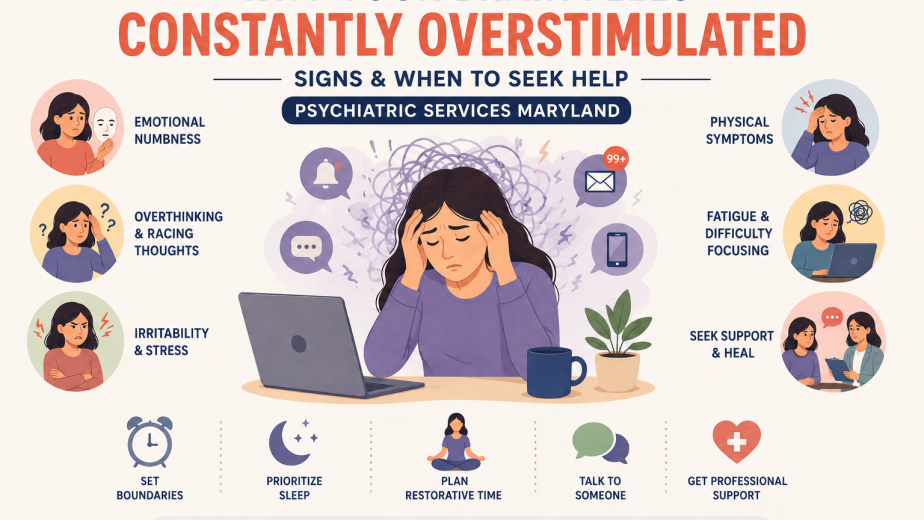
So when does this cross the line from “rough patch” into something that needs outside help? A useful rule of thumb: if the disconnected feeling has stuck around for weeks, if it’s getting in the way of work or relationships, or if it’s showing up alongside hopelessness or constant exhaustion, that’s your sign to stop waiting for it out. Catching it early through proper mood disorder management tends to make recovery a lot smoother, since numbness that goes untreated has a habit of deepening over time. A good therapist or counselor can help untangle whether what you’re feeling traces back to a mood disorder, an old trauma, or something else entirely, and from there build something actually tailored to you rather than a generic plan.
The Role of Professional Treatment and Counseling
Numbness like this rarely just fades on its own. It tends to be a symptom hiding a bigger story — depression, anxiety, unresolved trauma — which is why professional mood disorder management is usually part of any real solution. Approaches like cognitive behavioral therapy, somatic work, and trauma-informed counseling all aim at the same thing: slowly reconnecting mind and feeling without overwhelming the process. At Maryland Behavioral Health, the clinical team leans into that slow, compassionate approach rather than rushing anyone toward a fix. Through individualized mood disorder counseling, Maryland Behavioral Health helps clients dig into what’s actually driving the disconnection, then builds coping tools that hold up well beyond the therapy room.
How Maryland Behavioral Health Supports Your Recovery
Therapy alone isn’t always the whole picture. Sometimes recovery also calls for medication evaluation, changes to daily routines, mindfulness practices, or the kind of support that comes from a group setting. Maryland Behavioral Health pulls these pieces together into a continuum of care that flexes depending on what someone actually needs — sometimes that’s weekly outpatient sessions, sometimes it’s a more intensive level of support. If you’ve been feeling persistently checked out from your own life, that’s worth paying attention to, not pushing past. Maryland Behavioral Health offers a judgment-free starting point for anyone ready to take that first step back toward feeling something again.
Conclusion
Emotional numbness feels isolating, but it’s not permanent and it’s not a personal failure. It quite often serves as a warning which is usually better heeded rather than trying to ‘push through’ by oneself. Through a proper combination of therapy, support, and real treatment for mood disorders, one can definitely ‘reconnect’ with an enriched emotional life – and it might be even more ‘within reach’ than the person may feel at the moment.
Key Takeaways
- Emotional numbness usually shows up as a protective response to overwhelming stress, trauma, or an untreated mental health condition — not a personal failing.
- Left unaddressed, it can quietly damage relationships, motivation, and everyday functioning.
- Chronic stress, depression, anxiety, unresolved trauma, and certain medications are common triggers.
- Professional help like a therapist or a counselor sessions help identify the main causes and in time, can lead to the restoration of emotional connection.
- Getting timely treatment for mood disorders leads to better long-term outcomes and a noticeably better quality of life.
Frequently Asked Questions
- Is emotional numbness the same as depression?
Not exactly — it’s often a symptom of depression, but it shows up with anxiety, trauma, and chronic stress too, even without a formal diagnosis.
- Can emotional numbness go away on its own?
Sometimes, if it’s tied to short-term stress. But when it sticks around, it usually needs professional support to actually resolve.
- What therapy works best for emotional numbness?
The therapies that may be used most often in reconnecting people to feelings in the safest way are cognitive behavioral therapy, trauma therapy, and somatic therapy.
- How do I know if I need mood disorder counseling?
If it’s lasted several weeks, is affecting your relationships or work, or comes with hopelessness or constant fatigue, it’s worth talking to someone.
- Does medication help with emotional numbness?
Sometimes, especially when an underlying mood disorder is driving it. A provider can help figure out if that should be part of your plan.