Constant tiredness isn’t necessarily a sign of sleep deficiency only. Very often, mental tiredness and physical fatigue can be difficult to distinguish because they manifest with similar symptoms, however, they originate from different aspects of our life and require a different approach. As per the yomly report, nearly 71% of working adults have shown at least one symptom of stress, such as lack of focus, fatigue, or trouble sleeping. Understanding which type of fatigue you’re dealing with is the first step toward real recovery, and it’s also part of why preventive medical care matters so much in everyday life.
Mental Fatigue vs Physical Fatigue: How They Differ
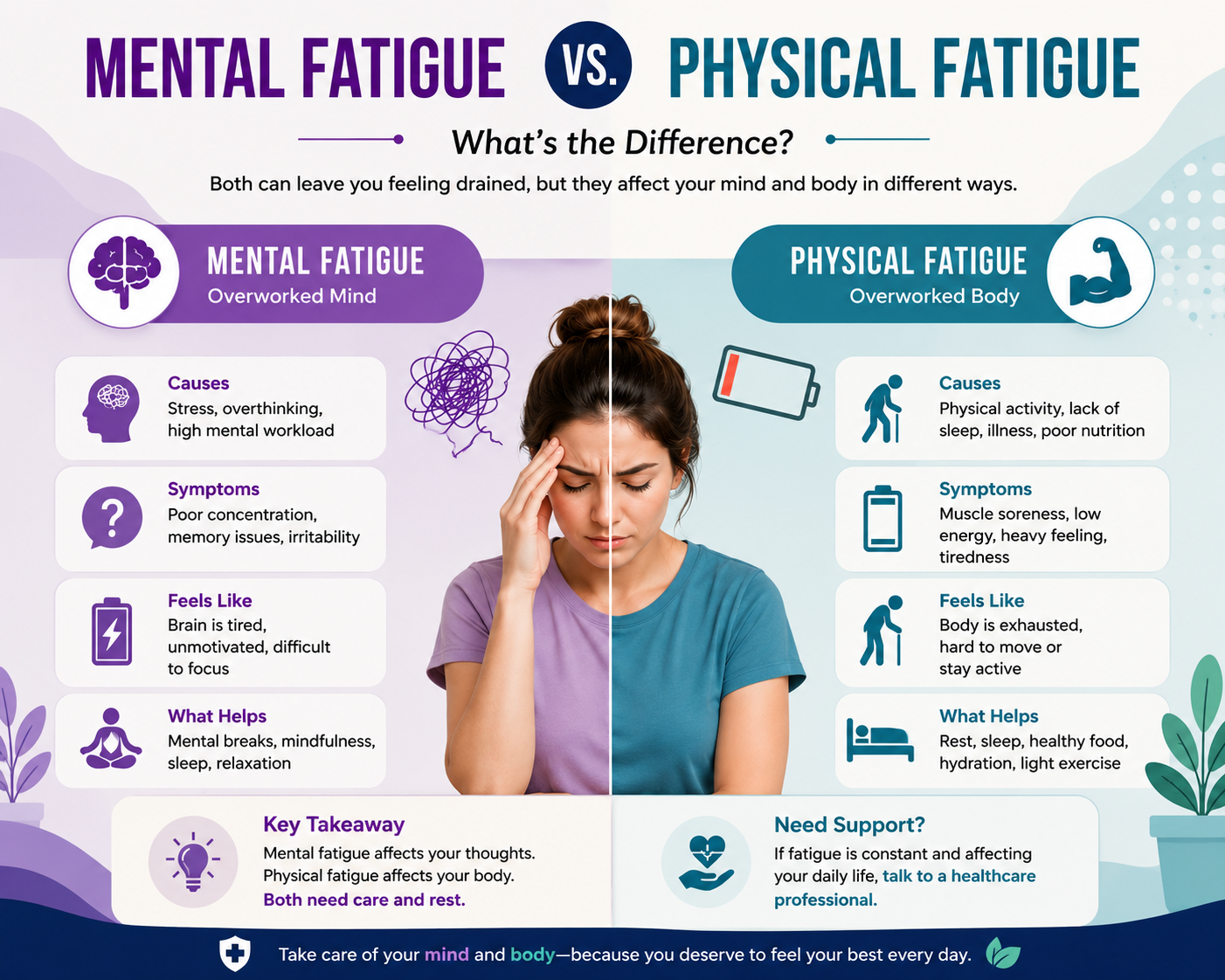
Physical fatigue is what most people picture first: heavy limbs, sore muscles, and a body that simply wants to rest after exertion. Mental fatigue is quieter but just as draining. It manifests itself in brain fog, short temper and problems with focusing, without the need for performing any physically demanding tasks. Both types of fatigue can be intertwined, and one can cause the other, so it is not uncommon for fatigue to be downplayed as simply “being tired”.
Common Causes of Each Type of Fatigue
Physical fatigue usually follows exercise, manual labor, illness, or poor sleep, and it tends to improve with rest, hydration, and time. Mental fatigue, on the other hand, is often caused by prolonged focus, decision-making overload, stress, or emotional strain rather than muscle use. Meanwhile, a worker mentally fatigued due to job stress can be physically tired as well, for example, due to shoulders being stiff or headaches, and a person who has recovered physically from sickness may hear of mental confusion and difficulty in motivation.
Why Recognizing the Difference Matters
Treating mental fatigue the same way you’d treat physical fatigue rarely works. Pushing through a mentally exhausting week with more sleep alone won’t address root causes like chronic stress, anxiety, or burnout. Recognizing which type of fatigue you’re experiencing helps you choose the right response, whether that’s a short walk and proper hydration or a conversation with a mental health professional. Persistent fatigue, of either kind, can be an early signal that something deeper needs attention, which is exactly where preventive medical care comes in.
The Role of Preventive Care Services in Spotting the Cause
This is where regular preventive care services play a meaningful role. Having gone through a healthcare provider regularly allows us to take notice of symptoms like fatigue that might eventually turn into a chronic problem. A physician is in a perfect position to identify if your exhaustion is due to some physical disorders such as anemia or thyroid dysfunction, or mental disorders like depression or anxiety. In the absence of such understanding, people usually go through several ineffective remedies for the entire duration of the problem without its being identified and treated at the root.
Why Preventive Medical Care Should Be Routine, Not Reactive
Preventive medical care isn’t just about catching disease early; it’s about understanding your body and mind well enough to address fatigue before it disrupts daily life. Annual physicals, bloodwork, and mental health screenings all contribute to a clearer picture of overall wellness. By regularly following a schedule for preventive health screening, you can detect any shortages of nutrients, sleep problems, changes in the hormonal pattern, or the early stages of mental disorders that cause physical as well as mental tiredness. As stress and burnout are increasing in all age groups, the idea of waiting until you become so exhausted that you cannot cope anymore is definitely not a good one.
How Maryland Behavioral Health Center Can Help
If you’re noticing ongoing fatigue, whether it feels more mental or more physical, Maryland Behavioral Health Center offers a supportive starting point. Maryland Behavioral Health Center takes a whole-person approach, looking at both the physical and emotional factors that may be contributing to your exhaustion. Rather than viewing fatigue as a mere symptom, Maryland Behavioral Health Center’s staff strives to get an overall understanding of your health situation by focusing on sleep, stress, mood, and lifestyle factors which are usually not considered during a standard medical examination. Choosing a provider that values preventive care services means you’re not just waiting for problems to appear; you’re building a relationship that supports long-term energy and resilience. Maryland Behavioral Health Center can help guide that process with personalized assessments tailored to your specific needs.
Fatigue, mental or physical, is a signal from your body that it is craving your attention. Knowing how to distinguish the two means that you will be in a position to correctly guess the best way to deal with the problem. Besides, if you regularly have preventive medical care, your chances of allowing fatigue to develop into a more severe problem are drastically reduced.
Key Takeaways
- Physical fatigue stems from bodily exertion or illness, while mental fatigue comes from prolonged focus, stress, or emotional strain.
- The two types often overlap, making it easy to misdiagnose the real cause of your tiredness.
- Regular preventive care services might determine the type of cause of fatigue, whether it is physical or mental.
- Through a preventive health screening, you can discover imbalances like that of the thyroid or even uncover mood disorders that have the potential to get worse.
- Our center in Maryland offers a holistic approach through which we pay attention to both physical and mental aspects causing fatigue.
FAQs
- How can I tell if I have mental fatigue or physical fatigue?
The main difference lies in the fact that physical fatigue is the result of a body being tired after the work, whereas mental fatigue can be manifested through brain fog, irritability, or having difficulty to focus even when there was no physical effort.
- Can mental fatigue cause physical symptoms?
Mental fatigue often results in physical symptoms such as headaches, muscle pain or fatigue. That is because stress involves the entire organism.
- How does preventive medical care help with chronic fatigue?
Preventive medical care is a great way to keep chronic fatigue in check because it helps health professionals identify issues capable of causing fatigue such as hormone disorder or depression at an early stage.
- What preventive care services should I prioritize if I’m always tired?
Some of the important preventive healthcare services that can help determine the cause of fatigue are analysis of blood samples, sleep study, and counseling sessions with a therapist.
- When should I see a professional about fatigue?
If fatigue lasts more than a few weeks despite rest, it’s time to consult a provider who can run a preventive health screening and assess both physical and mental factors.