
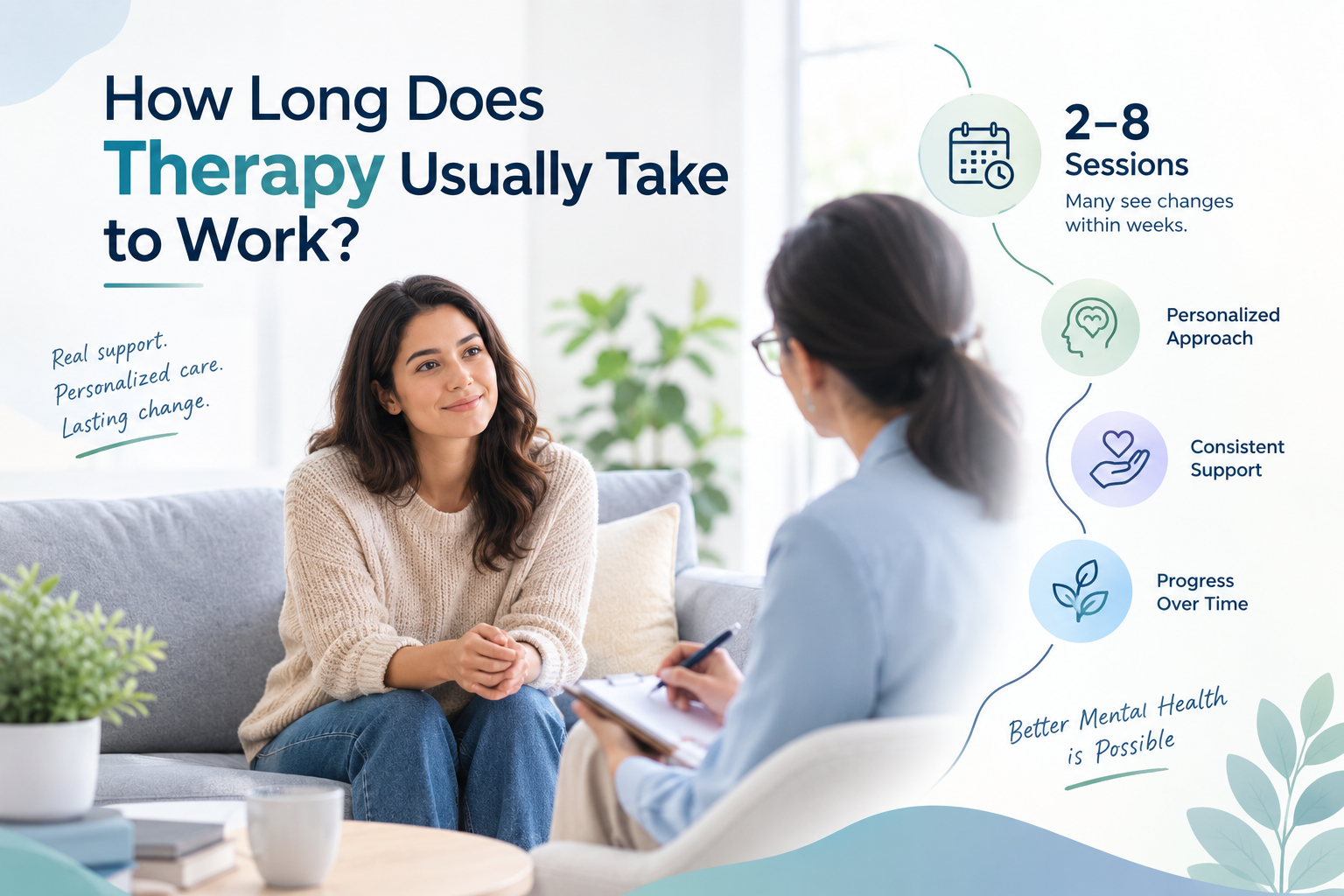
Starting therapy is a big step, and most people want a simple, honest answer: when will I actually start to feel better? The truth is that it depends on the person and the concern being treated, but that’s exactly what good Mental Health Services are built for — a clear, personalized plan instead of guesswork, so you always know what progress should look like along the way.
As per the research from the Anova Center for Therapy found that about 78% of patients who stay in therapy notice meaningful benefits after just 2 to 8 sessions. That number matters because it pushes back on the idea that therapy only helps after months or years. For many people, relief starts sooner than expected, as long as they stay consistent with the right provider.
Why Timelines Vary
No two people heal at the same pace. A few factors shape how fast someone responds:
- The type of concern: Stress reactions tend to get better faster than a chronic mood disorder or multiple complicated traumas.
- The approach used: Formal approaches such as cognitive-behavioral therapy usually demonstrate improvement in a predictable number of sessions.
- Consistency: Attending sessions regularly, instead of coming sporadically, plays a major role in determining the outcome.
- The therapeutic relationship: A genuine rapport built between you and your therapist can often accelerate the progress faster than one intervention or the other.
Providers who take time to understand your history, instead of applying a generic plan, tend to get better results. A thoughtful intake process is one of the first things to look for in Mental Health Services.
What the First Few Sessions Look Like
Early sessions mostly build a foundation. The counselor will want to hear your story and find out what your goals are and you can work out a plan of treatment in cooperation. Usually feeling relief just by being heard is a quite natural thing.
For someone pursuing treatment for depression, the first month often focuses on identifying patterns — negative thinking, sleep disruption, withdrawal — and introducing small, manageable changes. Noticeable shifts in mood frequently show up within four to eight sessions when therapy is paired with follow-through between appointments.
Short-Term vs. Long-Term Care
Not everyone needs years of ongoing care. Short-term, goal-focused therapy can resolve specific issues in 8 to 16 sessions. Longer therapy is more suitable when there are problems that one gets used to living with, very traumatic experiences that have been deeply internalized, or multiple stressors occurring at the same time, etc.
This is especially true for trauma counseling services, where healing often unfolds in stages rather than a straight line. During the beginning, the sessions aim at safety and stabilization but when a client is comfortable, the therapist gradually shifts the focus to getting the memories that trigger the trauma out and discussing them until a client finally makes a peace of some sort with the painful experience. Rushing this process can backfire, which is why experienced clinicians pace trauma counseling services carefully instead of forcing quick results.
Signs Therapy Is Working
Progress is often gradual and easy to miss. Common signs include:
- Feeling calmer during stressful moments
- Sleeping more consistently
- Noticing unhelpful thought patterns before they take over
- Returning to activities you’d previously avoided
If these shifts haven’t appeared after several months, it doesn’t mean therapy has failed — it may mean the approach needs reassessing. Mental health services worth their reputation regularly have a meeting regarding your progress and not just endless sessions going in no particular direction.
What Helps Speed Up Progress
Good Mental Health Services don’t just schedule sessions — they help you build habits that accelerate results:
- Be consistent: Skipping sessions slows momentum.
- Do the “homework:” Many approaches include small exercises between sessions.
- Communicate honestly with your provider about what’s actually happening.
- Give it time before switching providers — most clinicians recommend at least four to six sessions before deciding.
- Combine care when needed: Combining therapy and medication might lead to an early improvement especially for treatment for depression that didn’t react to talk therapy alone.
Finding the Right Support
Because timelines vary, working with a provider who tailors care to your situation matters more than any fixed session count. At Maryland Behavioral Health, treatment plans are built around each person’s history and goals rather than a generic template, which is part of why many patients notice progress earlier than expected. If you would like to know more about treatment for depression, if you are in need of trauma counseling services or simply an examination of your state, Maryland Behavioral Health facilitates not only telephone and Internet appointments, but also face-to-face consultations at various locations across Maryland.
If you’ve been putting off support because you’re unsure how long it takes, know that many people see real change within weeks. The team at Maryland Behavioral Health can help you build a plan so your Mental Health Services experience feels focused from the first appointment.
Key Takeaways
- Based on the 2026 report from therapists, many individuals begin noticing a change within a 2 to 8 time period.
- Getting better is different for everyone based on the issue one is addressing, the method used for intervention and of course the frequency of session attendance.
- Short-term therapy can resolve specific issues in 8 to 16 sessions; trauma often needs longer, staged care.
- Progress signs include better sleep, calmer reactions to stress, and returning to avoided activities.
- Personalized plans, like those at Maryland Behavioral Health, tend to produce faster, more lasting results.
FAQ’s
- How many sessions does it usually take to feel better?
Most people start to change for the better during 2 to 8 therapy sessions, but the result will depend on the issue you’re dealing with and how often you attend.
- Is it normal to not feel different after the first session?
That’s totally normal — the very first session is mainly about getting to know the issues presented and establishing a connection, therefore, meaningful change takes a few more sessions.
- How long does trauma counseling usually take?
Usually, trauma counselling is broken into stages and requires more time compared to ordinary psychotherapy as the therapist’s goal is to ensure that the client becomes a safe person to work with before any deeper exploration is undertaken.
- Can therapy alone treat depression, or is medication needed too?
Many people do not require medication and they can successfully treat depression through psychotherapy alone. That said, some people get better results from taking antidepressants and undergoing counseling together.
- What if I don’t feel progress after a few months?
If you are still feeling stuck after several therapy sessions, it is probably a sign that you need to look for a different therapist or a change in the method. However, one should never rule out therapy just because it doesn’t provide results immediately.


