You have probably run the numbers in your head already. A therapy session here, a psychiatric visit there, a prescription copy on top. It adds up, and it is fair to ask whether the spending pays off. Looking into mental health services Maryland residents can realistically access is a practical first step, because the answer depends on what you get for the money. For most people, steady care costs less over the years than leaving symptoms alone. Here is why, and how to judge the options for yourself.
What “Worth It” Really Means
Worth is not only about money. Most people mean three things: do I feel better, do I function better at work and home, and can I keep up with the bills? Long-term value shows up in all three, just on different timelines. Sleep and energy may shift within weeks, while steadier relationships, reliable attendance at work, and fewer crisis moments build over months. Deciding what “worth” means to you first makes every option easier to compare.
Skipping care has a cost too, but it arrives quietly: missed workdays, strained friendships, urgent care visits, and physical problems that go unmanaged.
What the Latest Data Shows
The need is large. According to the 2025 National Survey on Drug Use and Health, released by SAMHSA in July 2026, 7.4% of U.S. adults, about 19.7 million people, had a major depressive episode in the past year. The same release reports that 50.9% of adults with any mental illness received treatment, so roughly half did not.
Getting help is common; getting it consistently is harder. Closing that gap early is what keeps a manageable problem from growing, and it is where most of the long-term payoff sits.
Where the Long-Term Return Comes From
- Fewer setbacks: Ongoing care catches a rough patch early, before it becomes a lost month of work or an emergency room visit.
- Better daily function: Focus, patience, and motivation tend to improve once symptoms are managed.
- A healthier body: Depression and anxiety often travel with poor sleep, chronic pain, and heart or blood sugar problems.
- Less wasted effort: A provider who tracks progress adjusts the plan, so you stop paying for what is not working.
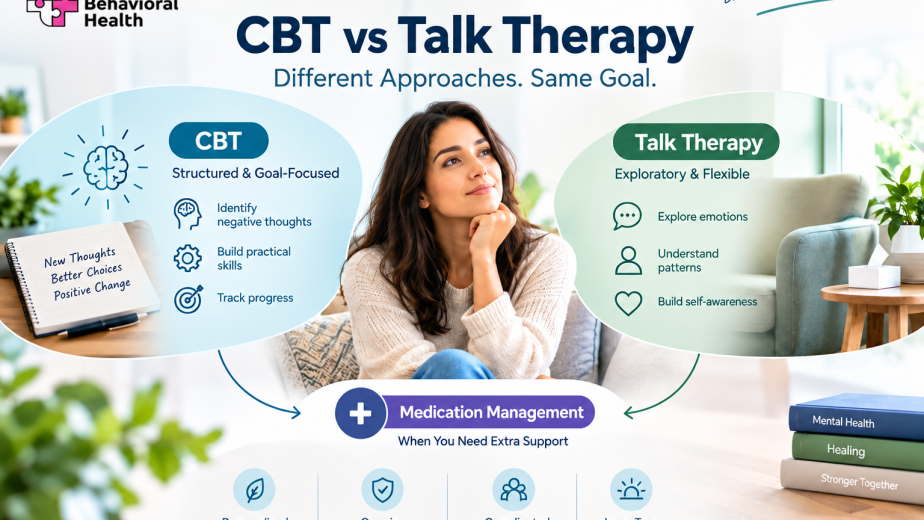
For many adults, mental health treatment for depression works best as a combination of talk therapy and, when symptoms are heavier, medication. Practices offering mental health services Maryland families trust usually bring both together, which keeps scheduling and costs easier to manage. Small gains in each area compound over several years.
Where Your Money Actually Goes
Therapy is typically weekly or every other week and is the most time-intensive piece. A psychiatric evaluation is usually one longer visit followed by shorter check-ins. People searching for Psychiatric Services Maryland providers often find that this first appointment is where a clear diagnosis and plan come together.
Once a prescriber finds a medication that fits, Mental Health Medication Management becomes quicker and less frequent. Those visits cover side effects, dose changes, and whether the medication still makes sense, and they tend to be a lower-cost part of care once things stabilize. Knowing this breakdown helps you budget before you start.
How to Judge a Provider Before You Commit
When you compare mental health services Maryland providers offer, ask:
- How soon can I get an appointment?
- Will I see the same clinician each time?
- Is insurance accepted, and is there a fee option if cost is tight?
- Are telehealth and in-person visits both available?
- Can one practice handle therapy, psychiatry, and primary care?
Jot down each answer for two or three providers and compare them side by side. Maryland Behavioral Health, for example, offers psychiatry, therapy, and family medicine in Bowie, Silver Spring, Forestville, and St. Mary’s County, with same-week appointments and telehealth. It also runs a sliding fee discount program and accepts a range of private and public insurance plans. For depression that has not responded to standard options, the practice also provides SPRAVATO® (esketamine).
When It May Not Feel Worth It
Progress is rarely a straight line. The first approach to mental health treatment for depression does not always fit, and a medication may need adjusting before it helps. People who stop early often conclude treatment failed, when the plan simply needed a change. Tell your clinician early if something feels off. That is why continuity matters. At Maryland Behavioral Health, plans are reviewed as you go, and that follow-through is worth looking for in any provider offering mental health services Maryland patients can rely on.
Key Takeaways
- Skipping care carries hidden costs that often exceed the cost of steady treatment.
- About half of U.S. adults with any mental illness did not receive treatment in 2025, as per the SAMHSA research.
- Mental health treatment through consistent, combined medication and psychotherapy is the best for depression, especially that of long-standing type.
- Mental Health Medication Management service regularly reviews prescriptions ensuring they are safe, adjusted and affordable, thus preventing unwanted side effects and saving from high drug prices.
- Compare providers on access, continuity, cost options, and range of care.
- Stopping early is a common way the investment gets wasted.
Conclusion
So, is it worth it? For most people thinking about the long game, yes. Consistent care reduces setbacks, protects your work and relationships, and usually costs less than years of untreated symptoms. The key is choosing a provider you can stay with and trust to adjust the plan over time. If you want to explore mental health services Maryland offers close to home, or ask about Psychiatric Services Maryland patients can book this week, Maryland Behavioral Health is ready to talk. Book an appointment at marylandbhealth.com and take the first step toward steadier days.
FAQ’s
- How long before I notice results?
Many people feel early changes within a few weeks, though deeper progress usually takes a few months of steady care.
- Do I need Mental Health Medication Management if I am already in therapy?
Not necessarily. Your healthcare provider would only suggest it if you have symptoms at the mid or a more severe stage or the problem doesn’t get resolved only through therapy.
- Can I get care if money is tight?
Speak of sliding scale services and insurance confirmation. Maryland Behavioral Health, for instance, offers both, hence, you can have an idea of your expenses well in advance of an appointment.
- Is telehealth as effective as in-person care?
It may very well be the case for many. You might want to check especially for therapy and medical follow-ups. On the other hand, if you are the type of person who prefers in-person sessions, you might find out that face-to-face care is quite adequate to your needs anyway.
- What happens at a first visit for Psychiatric Services Maryland patients?
Probably, the clinician will talk about the patient’s presenting problems, how the illnesses came about from a personal point of view, and what the patient wants. In doing that, your therapist or psychiatrist is helping you come up with your therapy plan or treatment plan.