
Living with ADHD can feel like running on a treadmill someone else is controlling the speed of. You push through the disorganization, the missed deadlines, the thoughts that won’t slow down — and you do it for years, often without realizing you’re headed straight for a wall. That’s where care management services earn their keep. They catch the warning signs before burnout swallows a person’s daily life whole.
The scale of this issue is bigger than most people assume. A 2026 adult ADHD statistics survey reported, the female gender has been 44.2% of all diagnosed cases, which compared favorably to the previous data that showed an underrepresentation of female ADH patients by a large margin. This shift shows how many people have quietly struggled without a name for what they were experiencing.
Why ADHD Burnout Goes Unnoticed
ADHD burnout doesn’t look like the burnout most people picture. It rarely announces itself with a dramatic breakdown. On the contrary, it stealthively enters through tiny openings such as missing one’s meetings, being harsh with the spouse, child, family member, or anyone close at hand, or just staring at the to-do list and getting no idea of the task at hand. These symptoms, which often overlap with the stress of daily life, are dismissed as a sign of laziness rather than a serious health issue.
This is precisely why structured care management services matter. A trained provider can distinguish between temporary stress and a pattern of chronic strain, then guide the person toward the right combination of therapy, medication review, and lifestyle adjustments.
Symptoms Most People Miss
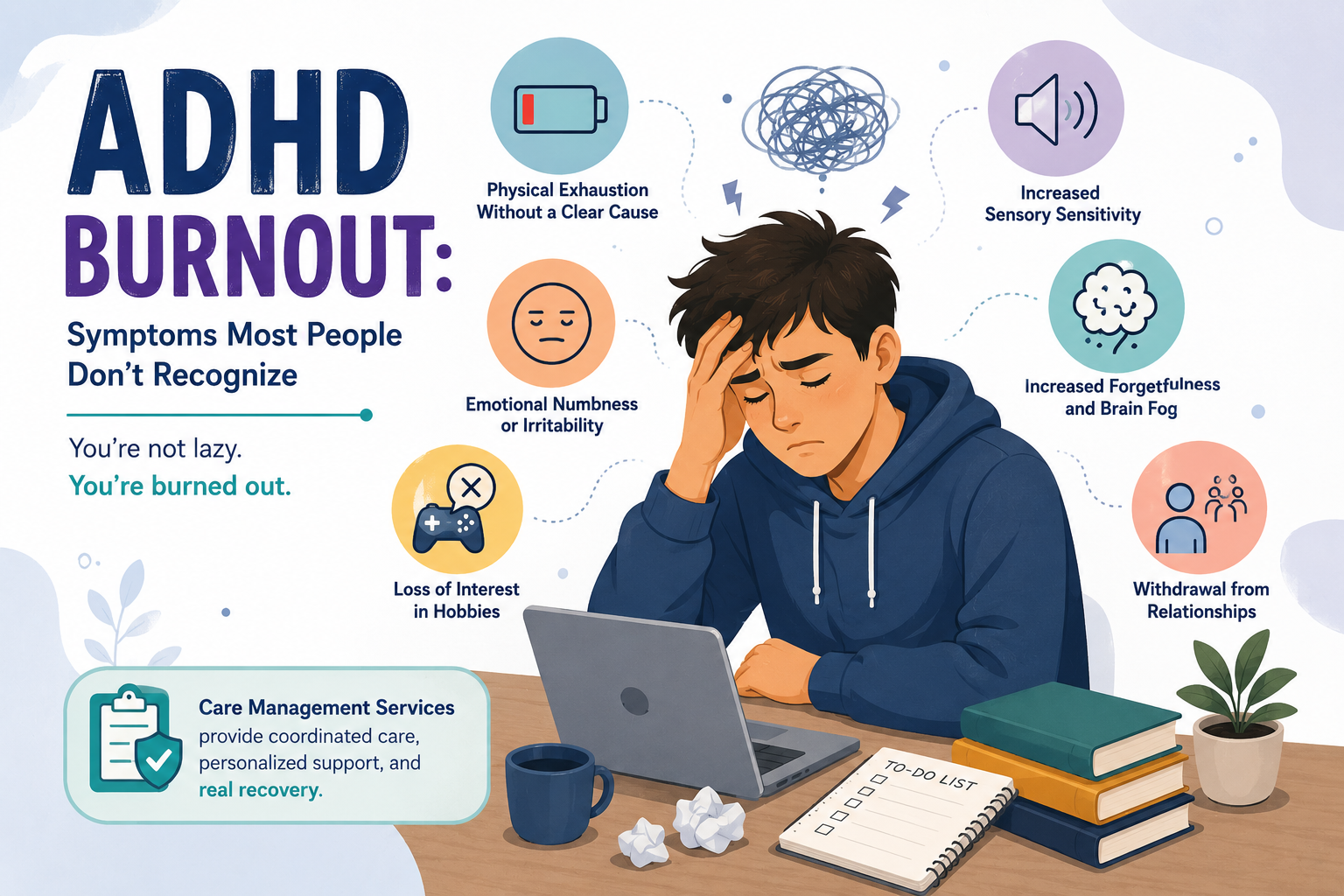
- Emotional numbness or sudden irritability: A flattening of emotions paired with unpredictable irritability is easy to miss. They might not feel anything about the things that previously would have thrilled them and then they might get angry over a very small incident — such behaviors are easily mistaken for a change in personality rather than exhaustion tied to mood disorder management needs.
- Physical exhaustion without a clear cause: Many people describe feeling drained even after a full night’s sleep, with headaches, muscle tension, and heaviness that rarely get connected back to ADHD itself.
- Increased sensory sensitivity: Sounds, lights, and crowds that were once tolerable can suddenly feel unbearable — a sign the nervous system’s coping reserves are running low.
- Loss of interest in hobbies: Hyperfocus is commonly related to ADHD, however, burnout extinguishes that. Once enjoyable activities start being perceived as just another thing to do and not a reason for happiness.
- Increased forgetfulness and “brain fog”: Since working memory is already an issue for several of the ADHD individuals, it deteriorates even more during burnout when keys get misplaced, conversations get forgotten half way through, and basic decisions become really hard.
- Withdrawal from relationships: Social masking — the constant effort to appear composed — takes a heavy toll. During burnout, people often pull away from friends and family because they no longer have the energy to keep up appearances.
The Overlap With Chronic Illness and Mood Disorders
ADHD rarely exists in isolation. It frequently overlaps with other health conditions, which makes burnout harder to identify and treat. For someone juggling a physical illness alongside ADHD, chronic disease management and ADHD support need to work together rather than as separate tracks.
Burnout can also intensify depression, anxiety, or bipolar symptoms. Ongoing mood disorder management alongside ADHD treatment helps prevent one condition from quietly worsening the other.
How Professional Support Makes a Difference
Recovering from ADHD burnout is rarely something a person can manage alone through willpower or a new planner app. The healing usually comes through therapy, a review and adjustment of medication as necessary, and regular attendance at appointments. This is exactly the gap that dedicated care management services are built to fill — connecting psychiatric care, therapy, and everyday routines so nothing falls through the cracks.
At Maryland Behavioral Health, providers take this integrated approach very seriously. Rather than treating ADHD as a standalone diagnosis, the Maryland Behavioral Health team considers sleep, stress, other health issues, and support systems together, and then they tailor the treatment to eliminate burnout at its source, not just symptom management.
For adults balancing chronic disease management with ADHD, having one care team oversee both areas reduces the risk of conflicting treatment plans or missed warning signs.
Practical Steps Toward Recovery
Recovery from ADHD burnout is gradual, but a few consistent habits can support the process:
- Simplify routines: If you delegate some of your small daily tasks to your house cleaning service, automation or even a good old fashioned habit you might notice that it frees your mental space and you can then focus on other things.
- Protect sleep: Burnout and lack of sleep become a vicious circle; it is very important that one gets enough sleep.
- Set realistic boundaries: Saying no to nonessential commitments protects limited energy.
- Seek professional guidance: A provider familiar with ADHD can catch patterns a person might miss alone.
Key Takeaways
- ADHD burnout means experiencing very deep mental, emotional, and physical exhaustion, it is much more than mere tiredness.
- It often hides behind irritability, forgetfulness, or sudden loss of motivation.
- It can complicate chronic disease management for people juggling ADHD with another health condition.
- If you do not get help, this condition may get so bad that you are affected with anxiety, depression, or mood disorder problems that also need management.
- Professional care management services offer structured support that goes beyond willpower alone.
- Consistent, personalized treatment plans make a measurable difference in daily functioning.
Conclusion
ADHD burnout might be a quiet crisis at home that appears as forgetting things, being angry, or just being tired. It is very important to notice early these subtle signs of burning out in order to facilitate recovery. Structured care management service support individuals with burnout issues, offering them a solid foundation rather than having to cope by oneself. If these patterns sound familiar, reaching out to Maryland Behavioral Health can be the first step toward feeling steady again.
Frequently Asked Questions
- What is the difference between regular burnout and ADHD burnout?
Regular burnout usually stems from a single stressor. ADHD burnout builds from the ongoing effort of managing executive function daily.
- Can ADHD burnout be mistaken for depression?
Sure, the symptoms of burnout from ADHD such as the extreme tiredness, fatigue and irritation often are so similar to depression that is one of the primary reasons why the services of a professional are so significant if one’s condition is suspected of being burnout.
- How long does ADHD burnout typically last?
Healing from a burnout can be a long journey as it depends largely on support, therapy and whether or not the care is regularly taken, the length can vary from a couple of weeks to several months.
- Does medication alone fix ADHD burnout?
Medicines can offer support, though for most of the time, it will be necessary also to receive regular counseling and other forms of care to ensure long term recovery.
- When should someone seek professional help for burnout?
If the tiredness, the social withdrawal symptoms or being highly irritatable have been present for several weeks, that is an indication to reach out and talk to a professional such as Maryland Behavioral Health or a similar provider.


