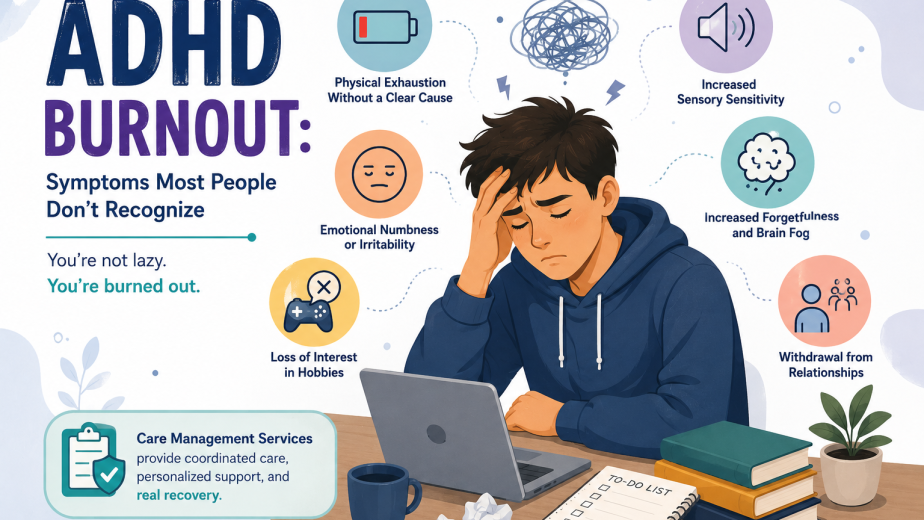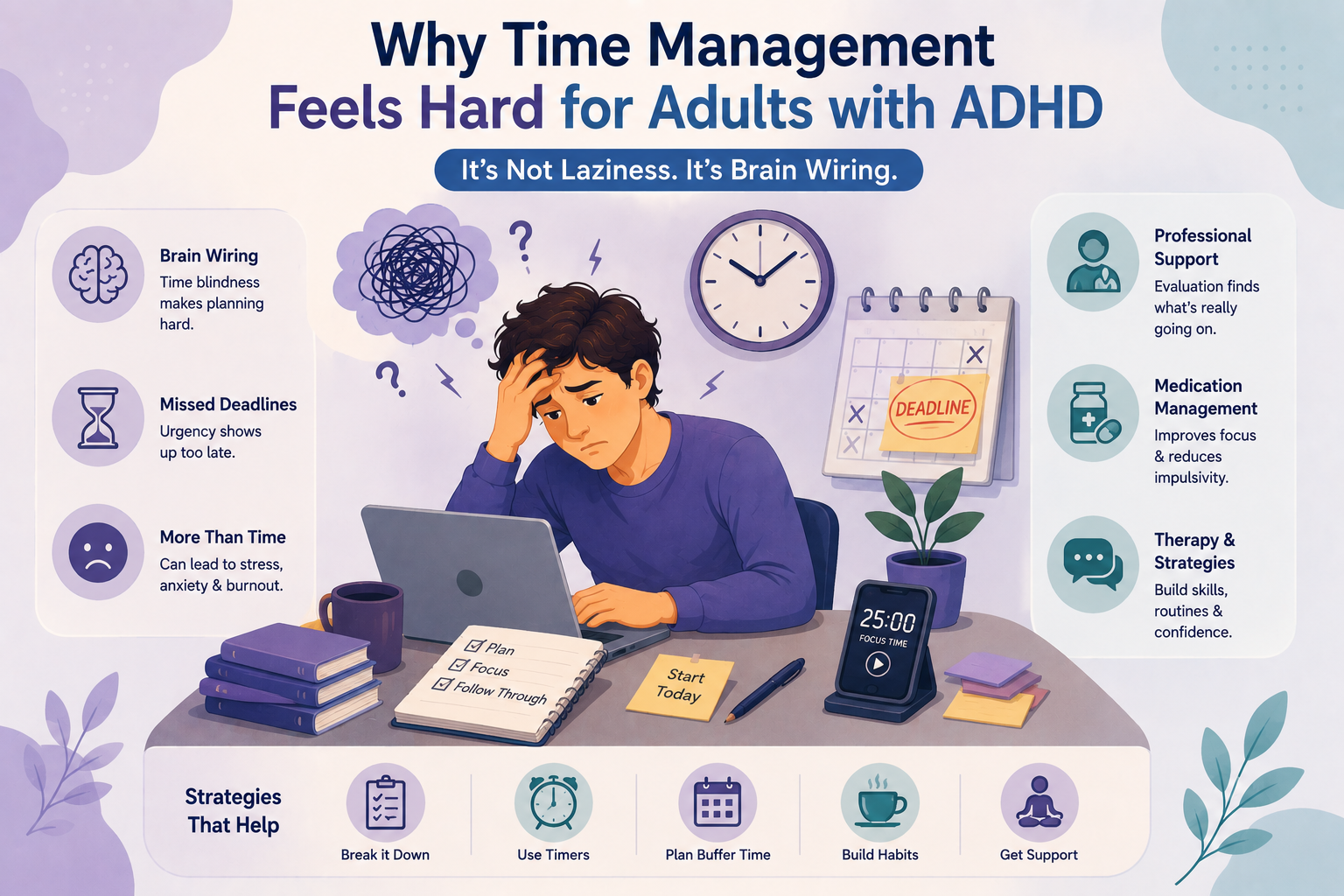
For many adults with ADHD, missed deadlines and last-minute scrambles aren’t a matter of laziness they’re a matter of brain wiring. Time management struggles are one of the most common reasons adults reach out for mental health services Maryland residents trust, because the difficulty isn’t really about willpower. It’s about how the ADHD brain processes time, urgency, and reward. Understanding this connection is the first step toward finding support that actually works, rather than another planner app gathering dust in a drawer.
The scale of the problem is bigger than most people realize. As per the Speakwise research, ADHD costs the U.S. economy an estimated $122 to $138 billion annually in lost productivity, with affected adults missing an average of 22 workdays a year due to symptoms tied largely to poor time perception and follow-through. These figures highlight a theme common to jobs sites, homes, and personal relationships: if time management doesn’t work, all other aspects become more difficult and a burden.
Why Time Feels Different for the ADHD Brain
Researchers describe this as “time blindness” a reduced ability to sense how much time has passed or how much remains before a deadline. For neurotypical adults, an upcoming deadline creates a felt sense of urgency days in advance. For adults with ADHD, that urgency often doesn’t arrive until the very last moment, if at all. This isn’t a character flaw; it’s tied to differences in executive function and dopamine regulation. That’s exactly why clinicians who specialize in mental health services Maryland families rely on, such as the team at Maryland Behavioral Health, treat time management struggles as a clinical symptom rather than a personal failing.
When Time Struggles Signal Something More
Occasional lateness or a missed to-do item is normal for everyone. But if one is constantly not keeping things organized, this is a signal of bigger things going on besides not being a “getter.” One person not managing their time well, especially if it’s getting chronic, left alone can really bring down that person, with anxiety and depression being very common and problems both at work and home also getting worse with time. Recognizing this pattern early, rather than dismissing it as a personality quirk, makes it much easier to get the right kind of help before the stress compounds.
How Psychiatric Support Helps
This is where professional psychiatric services Maryland providers offer real value. A thorough evaluation can determine whether ADHD, anxiety, or another condition is driving the disorganization, and can rule out overlapping issues like sleep disorders or depression that often masquerade as simple procrastination. Psychiatric services Maryland clinics provide are designed to look at the whole picture — sleep, stress, medication, and daily habits — rather than treating time management as an isolated skill to fix. At Maryland Behavioral Health, evaluations typically include a review of how ADHD symptoms show up specifically in daily scheduling, work performance, and household responsibilities.
The Role of Medication Management
Medication is often part of the answer, but it isn’t a cure-all. Careful medication management services can help stabilize focus and reduce impulsivity, making it easier to actually use the time management tools a person already knows about. This is one reason the mental health services Maryland patients choose most often combine medication oversight with therapy rather than offering one in isolation. For adults who have tried medication before without success, medication management services that include regular follow-up appointments can make a significant difference, since dosages and formulations often need adjustment over time. Maryland Behavioral Health offers ongoing monitoring so adjustments happen quickly rather than after months of guessing on your own.
Practical Strategies That Complement Treatment
Once a clinical foundation is in place, small daily habits go a long way toward making time feel more manageable.
- Break big projects into 15–30 minute chunks instead of vague to-do items
- Use external timers or alarms instead of relying on an internal sense of time
- Build in buffer time before appointments to offset chronic lateness
- Pair tasks with existing habits (e.g., “after coffee, check email”) to reduce decision fatigue
- Work with a therapist or coach to identify which strategies fit your specific brain
These strategies work best when paired with professional guidance rather than used on their own.
Key Takeaways
- Problems with time management related to ADHD arise due to differences in executive function and “time blindness.” It has nothing to do with being lazy.
- Statistically speaking, 2026 data has revealed that ADHD-related productivity losses exceed the American economy’s production losses amounting to over $ 120 billion a year.
- Medication usually only covers the symptom but not the root cause; a combination of treatment, therapy and development of time management strategies has a better chance at addressing the issue completely.
- A proper evaluation through the mental health services Maryland providers offer can identify what’s really driving the disorganization.
- Small, consistent strategies tend to work better than complex organizational systems for the ADHD brain.
Final Thoughts
Time management challenges don’t have to define adulthood with ADHD. With the right evaluation, medication oversight, and practical strategies, most adults see real improvement. If chronic lateness, procrastination, and missed deadlines are affecting your work or relationships, reaching out to mental health services Maryland adults trust is a reasonable next step — not a last resort. Visit Maryland Behavioral Health to learn more about scheduling an evaluation.
FAQs
1. Is poor time management always a sign of ADHD?
Many times, poor time management is not a symptom of ADHD. Some other conditions like anxiety, depression, and sleeping disorders can also cause similar symptoms. Having a professional diagnosis or evaluation is a very good way to know for sure.
- Can medication alone fix ADHD time management problems?
Most of the time medication on its own is unlikely to be the solution for ADHD time management problems. Usually, medication management services get the best results when combined with practical techniques and therapy as well.
- What’s the difference between psychiatric care and therapy for ADHD?
Psychiatrists are basically the ones who identify psychiatric disorders and prescribe medications. Therapists, on the other hand, are the professionals who teach their clients coping mechanisms and help them create routines that fit in with their lifestyle.
- How long does it take to notice improvement?
It has been observed that many adults start seeing changes in their attention span in the first few weeks after therapy, however, permanent behavior alterations take much longer time.
- Where can adults in Maryland get help for ADHD-related time management issues?
Services offered by providers like Maryland Behavioral & Addiction Services include evaluations, medication oversight as well as individualized therapy for adults with ADHD.