Key Takeaways
- Chronic stress activates the stress response of your body for a longer time, which is detrimental to almost all the systems in your body.
- The high level of cortisol released during prolonged stress leads to a higher probability of developing heart diseases, diabetes and immune system dysfunction.
- Feelings of emotional exhaustion and anxiety are usually mental health results of prolonged stress that is not managed.
- A well-organized chronic care management and chronic disease management programs can help address the physical and emotional effects of stress.
- Early, professional support through care management services is the most effective path toward long-term recovery.
Introduction
Stress has always been a part of life — but the scale has become alarming. According to SingleCare’s 2026 Stress Statistics report, around 75% of U.S. adults experience stress, and at least two-thirds say it shows up physically — as fatigue, headaches, and anxiety. When that stress never fully goes away, it becomes something far more serious. Chronic care management specialists see the damage every day: bodies stuck in a stress loop that quietly erodes health, mood, and quality of life. This blog breaks down exactly what happens inside your body when stress becomes a long-term condition — and why getting the right support early matters more than most people realize.
Your Body’s Stress Response — Designed for Emergencies, Not Everyday Life
Whenever you feel danger, the brain instantly triggers an alarm. The hypothalamus tells the adrenal glands to produce cortisol and adrenaline, which are the hormones that enhance your concentration, speed up your heartbeat, make your muscles tighter, and send blood to the most necessary organs. This is the classic fight-or-flight response, and in short bursts, it’s genuinely useful. The problem begins when the alarm never shuts off. Work pressure, financial worry, relationship conflict, or ongoing illness can keep the body in a sustained state of alert. Cortisol levels stay elevated. The immune system stays suppressed. The heart keeps working harder than it should. Over time, this wears down nearly every major system in the body.
How Chronic Stress Harms the Body — System by System
-
Heart and Blood Vessels
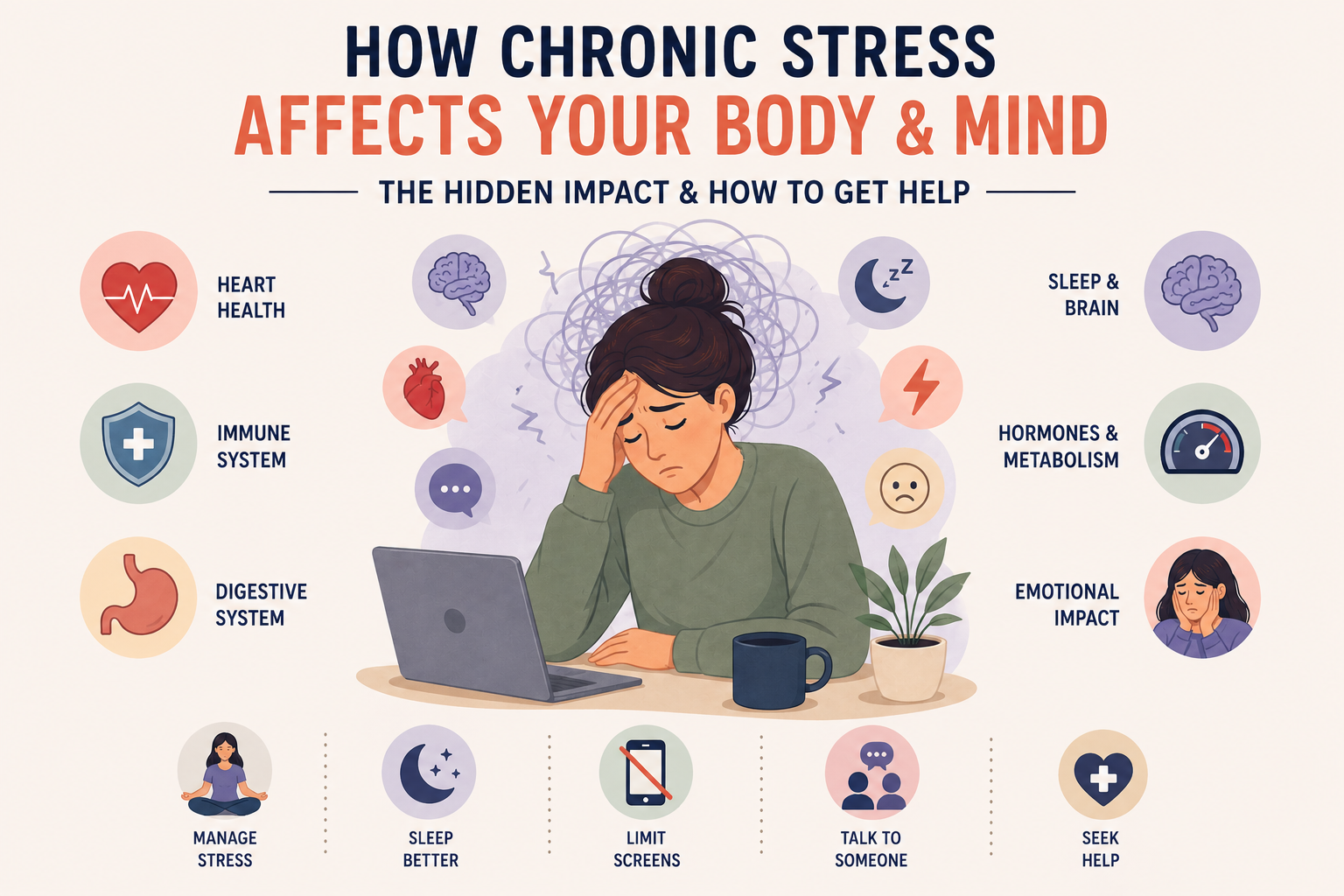
Sustained high cortisol raises blood pressure and promotes inflammation inside arteries. People dealing with long-term work-related stress carry a 40–50% higher risk of cardiovascular disease. This is one of the most well-documented consequences of living in a prolonged stress state, and it’s a core concern in chronic disease management programs across the country.
-
Immune System
Cortisol is naturally anti-inflammatory in small doses, but when it stays elevated for too long, it actually begins to suppress immune function. You become more susceptible to infections, recover more slowly from illness, and may notice that minor sicknesses hit harder and linger longer.
-
Digestive System
The gut and brain are tightly connected through the vagus nerve. Chronic stress may delay the breakdown of food, cause acid reflux, aggravate irritable bowel syndrome, and alter gut bacteria. Many people notice stomach problems long before they connect them to their stress levels.
-
Sleep and the Brain
Cortisol naturally dips at night to allow sleep — but chronic stress disrupts this rhythm. Many people find themselves wired but exhausted, unable to fall asleep or stay asleep. Sleep deprivation then amplifies the stress response the next day, creating a cycle that’s genuinely hard to break without outside help. Over time, the brain’s structure can actually change: the amygdala (responsible for fear and emotion) becomes more reactive, while the prefrontal cortex (responsible for reasoning) loses connectivity.
-
Hormones and Metabolism
Chronic stress is known to affect blood sugar control negatively, lead to fat accumulation especially around the belly, and even result in insulin resistance. The 2022 research in JAMA Psychiatry reported that individuals experiencing long-term stress had doubled risk of getting metabolic syndrome. Such changes in metabolism are a main reason why treating chronic diseases requires dealing with stress as a fundamental cause rather than just treating symptoms.
The Emotional Toll: Anxiety, Burnout, and Emotional Exhaustion
The physical symptoms of chronic stress are serious — but the emotional ones often hit first. Persistent anxiety, irritability, emotional detachment, and a sense of dread that doesn’t go away are all hallmarks of what mental health professionals call emotional burnout. You may feel like you’re going through the motions at work, struggling to connect with people you care about, or simply feeling “off” in a way you can’t quite name. These emotional symptoms are biological, not personal failures. A brain running on high cortisol has reduced access to dopamine and serotonin — the chemicals that regulate mood, motivation, and reward. Recognizing this is the first step toward getting real help.
Why Professional Support Makes the Difference
Self-help strategies such as exercise, sleep hygiene, journaling can provide meaningful relief for mild stress. But when chronic stress has been ongoing for months or years, the body and mind often need structured, professional support to genuinely recover. This is precisely the point of the wholesome assistance that Maryland Behavioral Health provides. Though our team deal with the psychological aspects as well as the physical implications of stress that has been going on for a long time by means of evidence-based care management services. We guide the patients in building effective coping methods, regaining emotional stability, and handling any physical disorders that may have resulted from stress through coordinated
In case you or someone close to you is exhibiting symptoms of chronic stress, physically, emotionally, or both, getting in touch with Maryland Behavioral Health can be an excellent first move. Our care management services are intended to assist people at their current stage and lead them to genuine, enduring relief.
You Don’t Have to Stay Stuck in Survival Mode
Chronic stress is not a character flaw, a sign of weakness, or just “the way things are.” It’s a genuine health condition with measurable effects on the brain, heart, immune system, gut, and metabolism. The good news is that with the right structure and support, the body has a remarkable ability to recover. Cortisol levels can normalize. Sleep can improve. Emotional resilience can be rebuilt. Effective chronic care management — the kind Maryland Behavioral Health specializes in treats the whole person, not just the symptoms. If chronic stress has started reshaping your life, it’s never too early — or too late — to reach out for help.
Frequently Asked Questions (FAQs)
- How is chronic stress different from normal, everyday stress?
Normal stress is short-lived and resolves once the triggering event passes. Chronic stress is persistent — the body stays in a state of heightened alert for weeks, months, or even years, which causes cumulative physical and mental damage that short-term stress simply does not.
- What are the most common physical signs that stress has become chronic?
Continuous headaches, irregular sleep patterns, susceptible to illnesses, gastro-intestinal problems, high blood pressure, lack of energy without any apparent reason, and muscle tightness which remains stable are among the physical symptoms indicating stress has gone past the phase of immediate reaction.
- Is it possible that chronic stress may cause serious health problems?
Indeed, continuous stress has been associated with heart diseases, type 2 diabetes, metabolic syndrome, immune system deficiencies, and the deterioration of existing conditions. For this reason, stress identification and eradication are part of many chronic disease treatment programs.
- When should someone seek professional help for chronic stress?
Consider professional help if your stress has been persistent for a couple of weeks and it disturbs your sleep, affects your relationships, lowers your work performance, or deteriorates your physical condition. The earlier you seek help, the more manageable recovery tends to be.
- What does care management services actually look like for stress-related conditions?
Care management services include mental health counseling, help from a doctor, and healthy lifestyle advice. Care managers will usually help you deal with your emotional symptoms of stress but they will also try to help you with physical symptoms of stress that results in your body and stress related changes.