Feeling cut off from others does more than dampen your mood. Chronic isolation is one of the strongest predictors of anxiety, depression, and substance use, and it often pushes people toward the exact conditions that make dual diagnosis treatment necessary in the first place. When loneliness and mental illness feed off each other, the risk of turning to alcohol or drugs to cope rises sharply, which is why understanding this link matters for anyone worried about themselves or a loved one. The numbers back this up. As per the Reach Out Recovery research, 81% of adults who identified as lonely also reported struggling with anxiety or depression, compared to just 29% of those who felt well-connected. That gap shows how deeply isolation reshapes mental health, and it explains why so many people entering treatment for depression or anxiety are also dealing with substance use.
How Isolation Fuels Mental Health Struggles
Human beings are wired for connection, and when that connection disappears, the brain reacts as if it were under threat. Prolonged loneliness raises stress hormones, disrupts sleep, and narrows a person’s ability to regulate emotion. Over time, this creates fertile ground for anxiety disorders, depression, and, in many cases, substance misuse. People who feel isolated often reach for alcohol or drugs as a way to numb the discomfort, which can quietly develop into a pattern that requires co-occurring disorder treatment to unwind. Isolation rarely stays confined to one part of life. Someone who withdraws from friends may also pull back from work, family, and routine self-care, deepening the sense of disconnection. This spiral is exactly why mental health providers increasingly screen for both isolation and substance use at the same time, rather than treating them as separate issues.
Why Isolation and Substance Use Often Occur Together
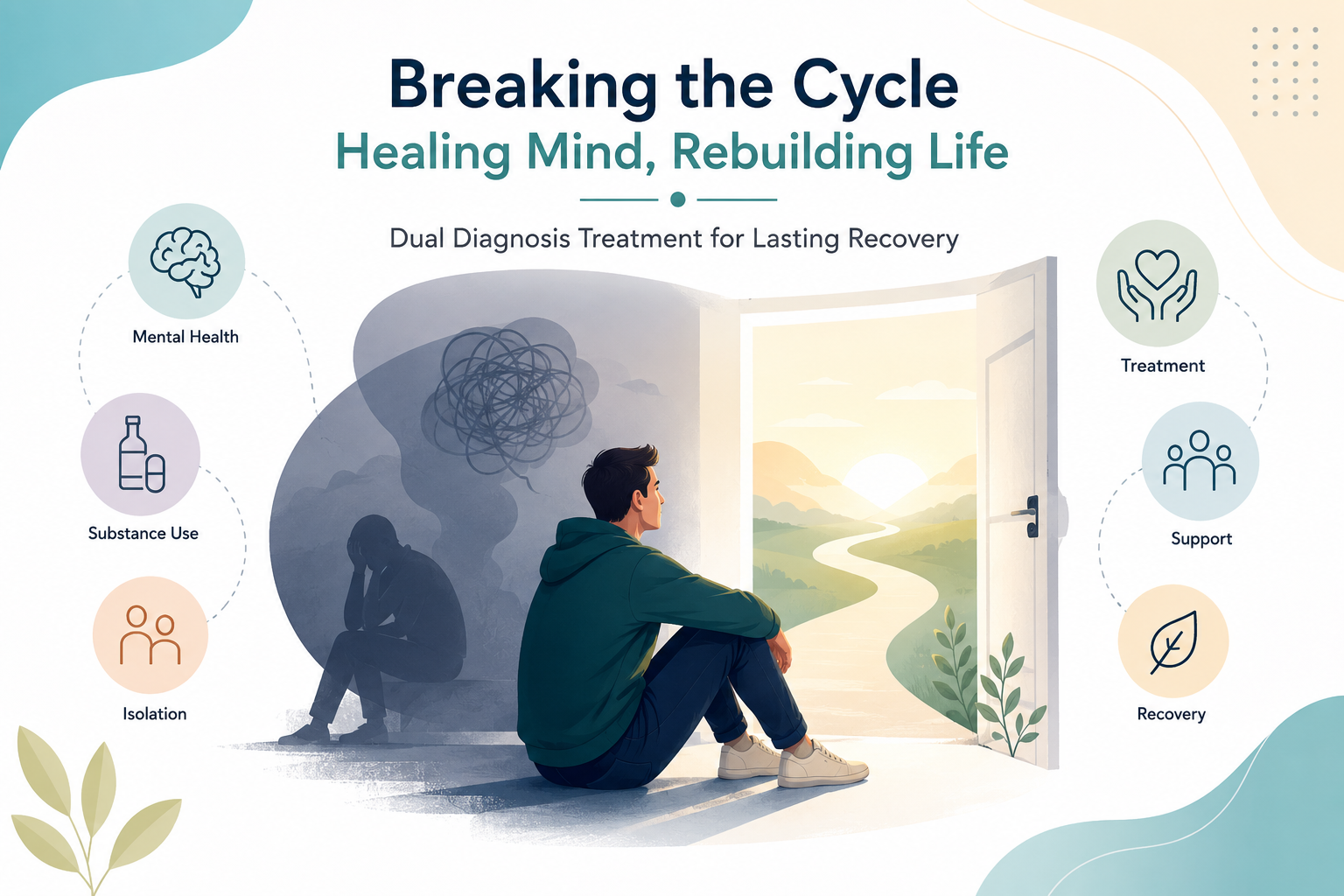
Isolation and addiction share a two-way relationship. Some people isolate because untreated mental illness makes socializing exhausting or frightening. Others isolate first, then turn to substances as a coping mechanism, which eventually worsens their mental health. Whatever the situation a person can suffer from both mental health condition and a substance use disorder at once.This overlap is precisely what dual diagnosis treatment is designed to address. Rather than treating depression in one program and addiction in another, an integrated approach recognizes that the two conditions influence each other constantly. Treating only one side of the equation, research consistently shows, raises the risk of relapse for both.
What Effective Treatment for Co-Occurring Conditions Looks Like
A strong dual diagnosis treatment plan starts with a full assessment of both mental health symptoms and substance use history. From there, treatment typically combines individual therapy, group support, medication management when appropriate, and structured programming that rebuilds healthy social connections. This last piece matters more than people expect: rebuilding a support network directly counters the isolation that helped drive the illness in the first place. Facilities such as Maryland Behavioral Health design their co-occurring disorder treatment programs around this exact idea. A well-run dual diagnosis rehab program pairs clinical care with peer support, group therapy, and family involvement, so patients relearn how to connect with others in healthy, sustainable ways instead of retreating further into isolation.
Choosing the Right Rehab Program for Co-Occurring Disorders
Some rehab centers are just unable to give proper help for people that have two disorders going on simultaneously. In truth, such dual diagnosis rehab programs should feature licensed mental health professionals and addiction experts working together, rather than separate silos. Ask whether the facility screens for underlying mental health conditions at intake, whether therapy addresses both isolation and substance use, and whether aftercare planning includes ongoing social support.
Maryland Behavioral Health takes this integrated approach seriously, offering individualized care plans, evidence-based therapies, and a strong emphasis on community reintegration. For anyone who has noticed how loneliness and mental health struggles reinforce each other, that kind of coordinated care can make the difference between short-term stabilization and lasting recovery. You can learn more about Maryland Behavioral Health’s approach on our website.
Moving Forward
Isolation and mental health struggles rarely resolve on their own, especially when substance use is part of the picture. Recognizing the link early, and seeking dual diagnosis treatment before the cycle deepens, gives people a much stronger chance at lasting recovery. There have been very good experiences in places such as Maryland Behavioral Health Center from where the idea of providing treatment simultaneously for the patients with mental health and the addiction problem came up by combining the two treatment areas into one instead of letting each fight its own way.
Key Takeaways
- Chronic isolation is strongly linked to anxiety, depression, and substance use.
- According to a 2026 survey, 81% of lonely people also had anxiety or were depressed, while only 29% of those living in the community felt this way.
- Isolation and addiction often reinforce each other in a two-way cycle.
- Integrated, co-occurring care addresses mental health and substance use together, rather than separately.
- Rebuilding social connection is a core part of recovery, not an afterthought.
Frequently Asked Questions
- What is dual diagnosis treatment?
It’s an integrated approach, also known as co-occurring disorder treatment, that treats a mental health condition and a substance use disorder at the same time instead of separately.
- How does isolation contribute to mental illness?
Being constantly alone can affect the body by producing high volumes of stress hormones besides disturbing emotional regulation; this results in the increasing chances of one developing anxiety, depression, or using intoxicants
- Why do isolation and substance use often occur together?
A mental illness may be the reason that one has isolated oneself or one chooses drugs in order to get rid of lonely feelings which gives rise to a reinforcing cycle that leads to both.
- What should I look for in a dual diagnosis rehab program?
Seek out a program where both mental health and addiction experts are available and working in unison, where the process of admission is very thorough so that any underlying conditions can be picked up, and aftercare plans that involve community support will also be important.
- Can rebuilding social connections help recovery?
Very definitely, one of the ways of counteracting isolation that is fueling co-occurring disorders is to participate in structured group therapy, involve family members, and to seek peer support.