Trauma is more than just an emotional scar. Sometimes, it is the reason for the changes in our thinking, behavior, and relationships that we might not even be aware of. As per Single Care report, about 9 million Americans are affected by PTSD, and many of these individuals notice genuine shifts in their personality over time. Recognizing this connection is often the first step toward seeking post-traumatic stress disorder treatment. At Maryland Behavioral Health, we regularly see how unresolved trauma can alter a person’s sense of self — and how the right support can help them find their way back.
Can Trauma Really Reshape Who You Are?
It’s true, and studies show that a traumatic event can change the way the brain reacts to stress, such that a person who was previously laid-back can become guarded, anxious, or short-tempered. People who have gone through trauma often say that they feel like a “different person” afterwards — even their friends and family might notice it before the person themselves. This is not a weakness of one’s character; it’s a natural response to overwhelming stress that, left unaddressed, becomes a lasting pattern rather than a passing phase.
The nervous system essentially learns that the world is dangerous, and it stays braced for the next threat long after the original event has passed. Over the span of months or years, this perpetual readiness can influence personality traits: a person who used to be trusting may become wary, and a person who used to be sociable may become reserved or isolated. Fortunately, the brain is still capable of changing even in adulthood which implies that these alterations can be confronted and, in most instances, undone with proper treatment.
Common Personality Shifts After Trauma
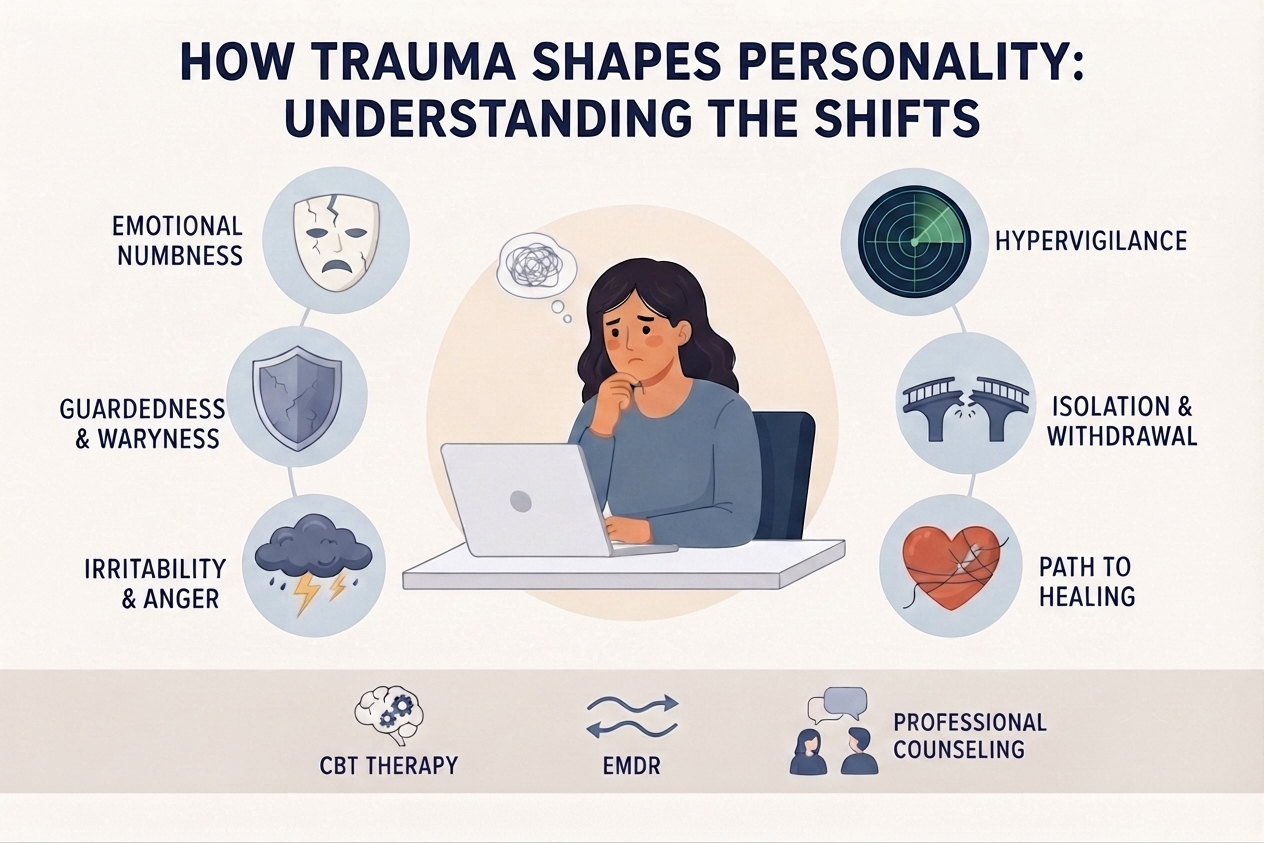
People living with unresolved trauma frequently notice:
- Sudden bouts of intense irritability or anger
- Numbness to emotions, inability to experience happiness and connection
- Being constantly on alert, even in secure environments
- Isolating oneself from friends and family
- Deterioration of one’s sense of self marked by guilt, shame, and lack of confidence
Relationships, jobs, and everyday life may be negatively impacted by these behavioral changes, thus underscoring the importance of prompt treatment.
Why Post-Traumatic Stress Disorder Treatment Matters
Left unaddressed, these personality shifts tend to deepen rather than fade. Thus, post-traumatic stress disorder treatment, a very structured one, is what is needed here. Therapies which are backed by research such as cognitive behavioral therapy and EMDR can assist in rewiring the brain’s threat response and consequently, reduce signs of post-traumatic stress disorder like being constantly on the lookout for danger or shutting down emotionally. With consistent post-traumatic stress disorder treatment, many people report feeling more like themselves again — calmer, more present, and better able to trust others.
At Maryland Behavioral Health, we develop treatment plans centered on the individual’s history and goals rather than implementing a uniform approach that is applicable for everyone. This individualized model is often what makes long-term recovery possible.
The Role of Trauma Counseling Services and PTSD Therapy Services
Professional support makes a measurable difference. Trauma counseling services offer survivors a judgment-free environment to process their traumatic memories while PTSD therapy services work on the physiological and emotional symptoms that keep the brain and body in “survival mode.” Together, these two forms of care help people separate who they were before trauma from who they’ve become since, and start rebuilding a more grounded, stable sense of identity that can hold up under everyday stress. Maryland Behavioral Health offers both trauma counseling services and PTSD therapy services in a supportive, judgment-free environment designed around real recovery, not quick fixes. Group therapy, individual counseling, and family sessions are usually combined to tackle personality changes from various perspectives simultaneously.
Conclusion
Trauma can affect a person’s emotions, actions and self-perception in profound ways, but these alterations are not necessarily everlasting. With the right post-traumatic stress disorder treatment, individuals who have experienced trauma may find a way of working through their trauma along with a type of rediscovery of their real self, step by step. In case you or a member of your family is having a hard time functioning after the trauma, Maryland Behavioral Health is a reliable companion on your road to recovery.
Key Takeaways
- Trauma can really change personality features such as patience, trust, and emotional openness.
- It’s typical for someone’s personality to change after trauma – Common changes may be irritability, numbness, hypervigilance, and withdrawal.
- Post-traumatic stress disorder treatment can gradually heal many of the changes.
- Trauma counseling services and PTSD therapy services together have the most potent healing effect.
- Healing is achievable through regular and individualized attention.
Frequently Asked Questions
1. Is it true that trauma can change someone’s personality forever?
It really depends. Trauma can significantly alter someone’s personality, but many of these changes can be reversed or healed through proper treatment and support.
- After trauma, how soon can personality changes be noticed?
Sometimes, they may be seen within a few weeks, and sometimes they might take a few months to appear, as it also depends on the sensitivity of the person and the traumatic event.
- Which therapy is most effective for personality changes caused by trauma?
CBT, EMDR and trauma focused talk therapy are among the most commonly recommended methods. They also have a track record of producing excellent results.
- I am feeling like a completely different person after trauma. Is that normal?
This happens to many people. It indicates that the brain is reorganizing itself after a traumatic stress and does not mean that the person is inherently flawed.
- How would one know that it is time to see a doctor regarding trauma?
It is advisable to consult a professional when the symptoms linger for weeks or if they disrupt one’s personal life, social interactions, work, etc.