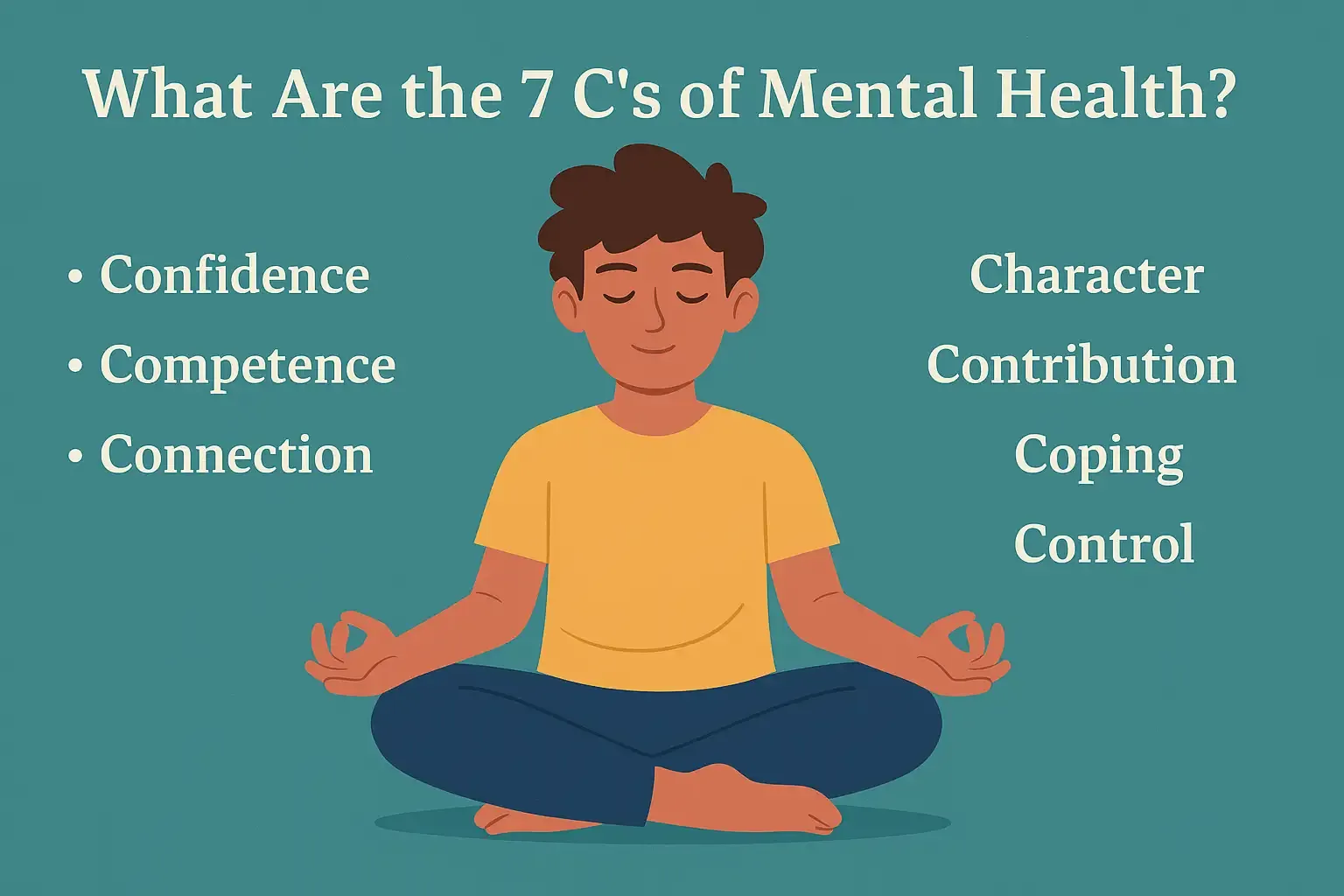
Mental health resilience – the ability to cope with stress and bounce back from life’s challenges – is crucial for overall emotional well-being. One useful way to think about resilience is the “7 C’s of Mental Health.” This framework (introduced by child development experts) includes Confidence, Competence, Connection, Character, Contribution, Coping, and Control. These qualities apply to everyone – from kids learning new skills to adults facing big life changes. Focusing on the 7 C’s can help people of all ages grow stronger and more adaptable.
Confidence
Confidence is about believing in one’s own abilities. When we feel confident, we tackle problems instead of giving up. Children build confidence by mastering small tasks (like tying shoes or solving a puzzle) and getting sincere praise. Teens boost confidence by trying new activities (like sports or art) and discovering they can succeed. Adults gain confidence by setting realistic goals at work or home and celebrating their successes. As experts note, confidence comes from demonstrating real skills in real situations.
Competence
Competence means having the skills and know-how to handle life’s challenges. It comes from practice and learning, not just encouragement. For example, a child learns to read or tie their shoes through practice, which builds competence. A teenager builds competence by studying and doing well on projects, or learning a trade. Adults feel competent when their education and experience prepare them for tasks (like fixing the car or giving a presentation). As we develop competence, we naturally feel more confident.
Connection
Connection is about feeling loved, understood, and supported. Strong relationships provide a powerful safety net for mental health. For a child, unconditional love from family (being listened to and hugged) creates security. Teens benefit from close friendships and caring mentors – these connections make them feel they belong. Adults draw strength from partners, friends, colleagues, and community groups. Empathy and caring in any relationship make people feel known and supported, which boosts resilience.
Character
Character involves knowing right from wrong and acting with kindness and integrity. It’s about our values. A child with good character might be honest about a mistake; a teenager might stand up against peer pressure; an adult might volunteer or help a neighbor. Working on character – by teaching and modeling honesty, compassion, and responsibility – gives people a sense of purpose and self-respect. A strong character helps guide better choices and makes us feel proud of who we are.
Contribution
Contribution means giving back and helping others. It’s realizing that “the world is a better place because you’re in it”. Everyone – from kids to adults – gains resilience by contributing. For example, a child might help clean up toys or donate clothes to charity; a teen might volunteer at school events or join a community project; an adult might mentor a coworker or help a neighbor. These acts of contribution make us feel useful and connected. Doing good for others often boosts our own mood and sense of purpose.
Coping
Coping skills are the healthy strategies we use to handle stress and strong emotions. Learning good coping early sets us up for success later. Children can learn coping by talking to someone when they’re upset, using art to express feelings, or taking deep breaths. Teens benefit from coping strategies like exercise, journaling, or talking with a friend or counselor when stressed. Adults cope by exercising, meditating, or seeking therapy. In fact, experts note that having a “wide repertoire of positive, adaptive coping mechanisms” (like exercise and relaxation) helps reduce anxiety and build resilience.
Control
Control means believing you have choices and can influence your life. It’s often called having an internal locus of control. Even though not everything is in our hands, focusing on what we can control is empowering. Children learn this by making simple decisions (like choosing what to wear) and seeing the result. Teens develop control by setting personal goals and making plans (such as a study schedule). Adults exercise control by problem-solving and planning steps toward goals. Research shows that people who believe their actions shape outcomes tend to have higher resilience. By recognizing our options and acting on them, we feel more capable and less helpless.
Marylandb Health offers integrated mental health support in Maryland to help people of all ages strengthen the 7 C’s. Our team of therapists, counselors, and psychiatric specialists work together to improve mental health resilience and emotional well-being. Through therapy and counseling, we guide clients in building confidence, competence, coping skills, and more – all personalized to each person’s life. In fact, professional counseling is often “a crucial step toward building resilience and gaining a deeper understanding” of one’s emotional health.
If you or a loved one would like help developing stronger mental health, please reach out to Marylandb Health. Our friendly counselors and therapists can work with you to nurture the 7 C’s and build lifelong resilience. Whether through individual therapy, family counseling, or psychiatric care, we support each person’s journey toward better emotional well-being. You don’t have to face challenges alone. Contact us today to learn how therapy and counseling at Marylandb Health can help you grow stronger and more resilient.