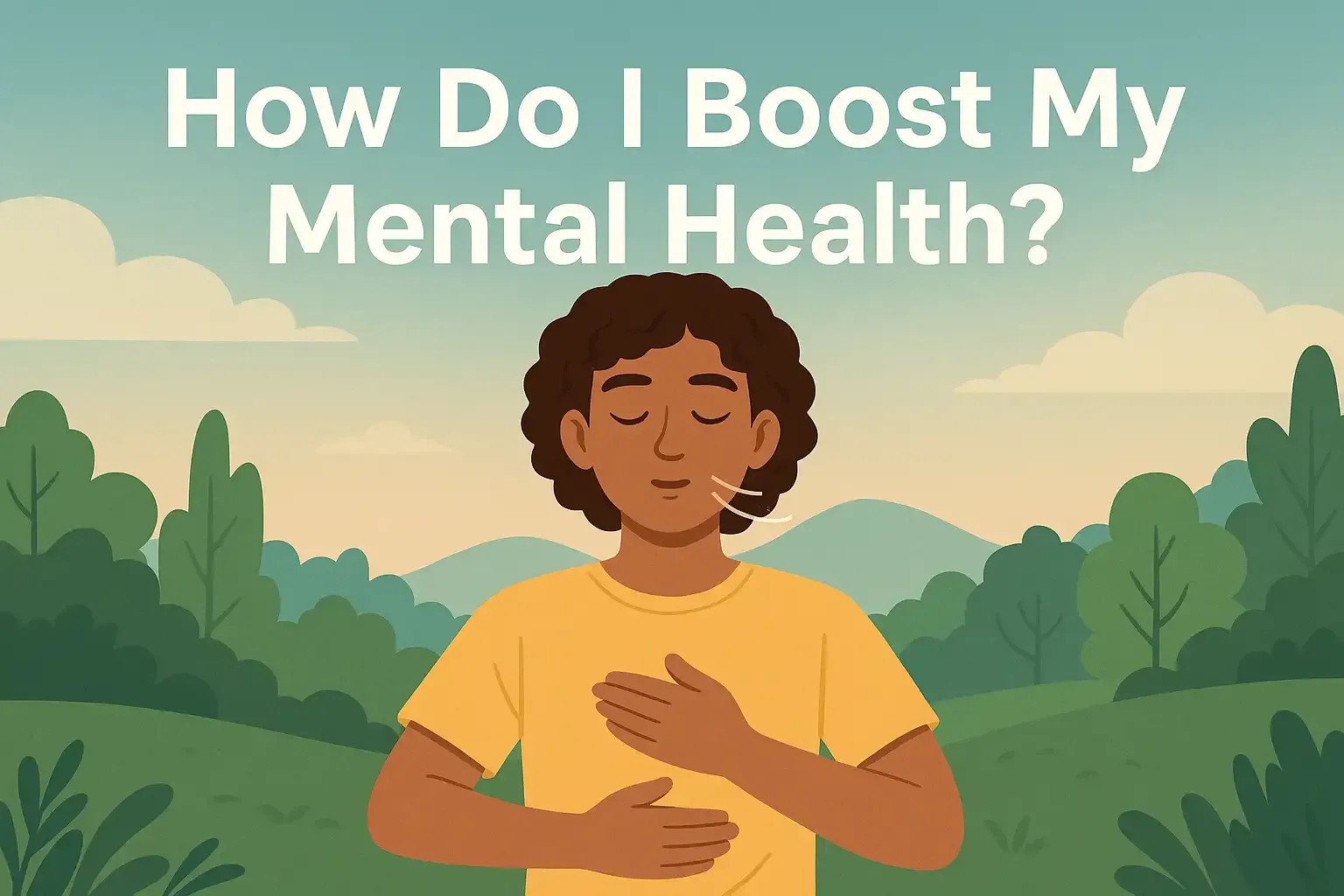
A young person practicing a relaxing breathing exercise, finding calm and focus.
Boosting your mental health is an important part of living a healthy, fulfilling life. Just as we take care of our bodies, caring for our mind and emotions is essential for overall wellness. In fact, nearly 1 in 5 adults lives with a mental health condition, yet only about half of those individuals receive treatment. If you’ve been feeling stressed, anxious, or down, know that you are not alone. There are proven strategies and support systems available to help improve your mental well-being. Often, the first step toward healing is reaching out for professional help – a step that can lead to meaningful, long-term improvement in your mental health.
In this article, we’ll explore clinical strategies to boost mental health, including therapy (individual, group, and telehealth options), psychiatric support with medication management, and evidence-based programs. These approaches are compassionate, community-focused, and accessible – designed to support you in feeling better and building resilience. Let’s dive into how each of these can help you on your journey to mental wellness.
Therapy: A Key to Mental Wellness (Individual, Group, Telehealth)
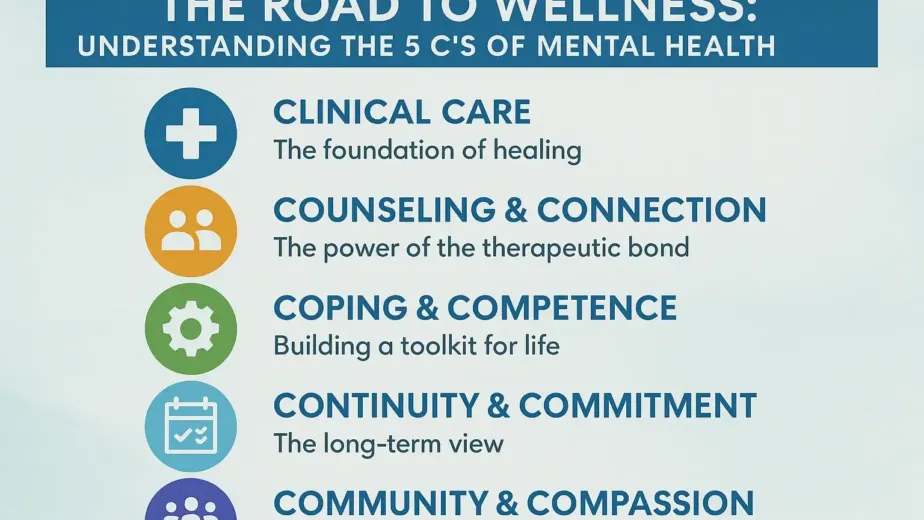
One of the most effective ways to boost mental health is through therapy. Talk therapy (psychotherapy) provides a safe, confidential space to explore your feelings, challenges, and goals with a trained counselor. Research consistently shows that therapy is highly effective for a wide range of conditions – from anxiety and depression to PTSD – and can significantly improve wellbeing. For some people with mild or moderate symptoms, therapy alone may be enough to help them cope and recover.
Individual therapy (one-on-one counseling) allows you to work closely with a therapist on personal challenges. The therapist can help you develop coping skills, reframe negative thoughts, and practice healthier behaviors. Many therapists use evidence-based techniques like Cognitive Behavioral Therapy (CBT) or mindfulness-based strategies to guide you in managing stress and emotions. Over time, you learn to handle life’s challenges in a more balanced way and build confidence in your own strengths.
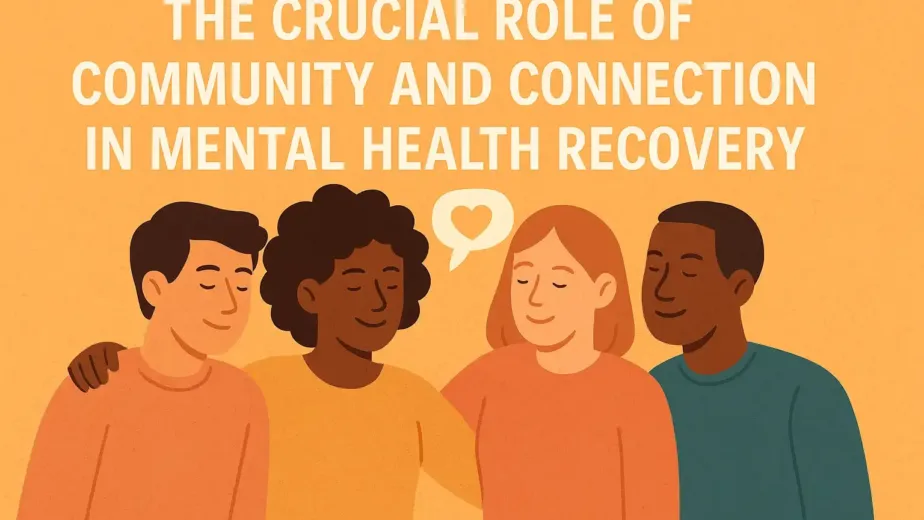
Group therapy and community support groups are another powerful resource. In group therapy, you meet with others who have similar struggles under the guidance of a professional. This group setting can help you realize that you’re not alone in what you feel, and members often support each other by sharing experiences and encouragement. It fosters a sense of community and belonging, which can boost your mood and confidence. Group sessions are also built on evidence-based practices – for example, some groups teach coping skills for anxiety or techniques for managing anger – all in a supportive environment.
Telehealth therapy (online counseling) has become an accessible option for mental wellness support. If you have a busy schedule or find it difficult to visit a therapist’s office, telehealth allows you to attend therapy sessions from home via secure video or phone calls. Studies suggest that tele-mental health care can be just as effective as in-person sessions for reducing symptoms and improving quality of life. At Maryland Behavioral Health, for instance, our team of therapists and telehealth counseling specialists use evidence-based practices to ensure you receive high-quality care remotely. No matter the format – in-person or virtual – therapy provides a compassionate outlet to process your feelings and learn positive strategies to improve your mental health.
Psychiatric Support and Medication Management
Therapy is a vital tool, but sometimes additional support is needed – especially for more severe or persistent mental health conditions. This is where psychiatric care and medication management come into play. Psychiatrists (and psychiatric nurse practitioners) are medical professionals who specialize in mental health. They can evaluate you to diagnose conditions like depression, anxiety disorders, bipolar disorder, and more, and then work with you on a tailored treatment plan. Often, treatment plans may include therapy, medication, or a combination of both, depending on your individual needs.
Medications for mental health (such as antidepressants, anti-anxiety medications, mood stabilizers, or others) can be very effective in easing symptoms. For example, the right medication might reduce severe depression enough that you have the energy to engage in therapy and daily activities again. Medications can provide stability and relief from symptoms like overwhelming sadness, panic attacks, or mood swings. It’s important to understand that medication isn’t about “changing who you are” – it’s about helping your brain chemistry balance out so that healing can take place. Many people experience significant improvement in their quality of life with proper medication management.
Research has found that combining therapy with medication tends to yield the best results for many people. In fact, large studies show that patients often have better outcomes with a mix of both psychotherapy and medication compared to either approach alone. Medication can alleviate the biological side of mental health conditions (like correcting a serotonin imbalance in depression), while therapy addresses the emotional and behavioral side (like teaching you coping strategies and new ways of thinking). This combined approach can be especially helpful for conditions such as major depression, PTSD, OCD, and generalized anxiety.
When you seek psychiatric support, your provider will help find the right medication and dosage for you and monitor how you’re doing. Medication management involves regular check-ins to ensure the medicine is effective and to manage any side effects. Over time, your psychiatrist may adjust your treatment as your needs change – for example, tapering off a medication if you improve, or switching to a different medication if needed. The goal is to find a stable regimen that supports your mental wellness with minimal side effects. Remember, taking medication for your mind is no different than taking medication for physical issues – it’s a form of self-care and medical care that can significantly boost your mental health and day-to-day functioning.
Evidence-Based Programs and Comprehensive Care
Beyond one-on-one therapy and medication, there are broader programs and services that can further boost your mental health. Many behavioral health centers (like Maryland Behavioral Health) offer evidence-based programs designed to provide structured support. These programs often combine multiple elements – therapy, skills training, peer support, and more – to help individuals make steady progress toward wellness.
For example, an Intensive Outpatient Program (IOP) provides structured therapy and support several times a week while you continue living at home. This can be helpful if you need more than weekly therapy but don’t require hospitalization. Similarly, a psychiatric rehabilitation program (PRP) focuses on building life skills and confidence for people recovering from serious mental health conditions. It might include sessions to teach daily living skills (like managing finances or cooking), social skills groups, and vocational support for finding jobs or volunteer opportunities. These evidence-based programs are staffed by professionals who use proven methods to help participants regain independence and hope. By combining therapy with practical skill-building and emotional support, such programs can lead to lasting improvements in mental health.
Support groups and workshops are another form of mental wellness support. Community support groups (often free or low-cost) let you share your experiences with others who understand what you’re going through – whether it’s a group for new mothers coping with postpartum depression, or a local chapter of a national organization like NAMI (National Alliance on Mental Illness). While these are not therapy per se, they are an evidence-supported complement to professional treatment. Many people find that peer support and knowing “I’m not the only one dealing with this” greatly boosts their morale and motivation to get better. Workshops or classes on stress management, meditation, or parenting skills (often offered by community health centers or hospitals) are also based on established psychological research and can enhance your coping toolkit.
Lastly, good behavioral health care takes a holistic approach. This means addressing not just symptoms, but all aspects of your well-being. Many clinics integrate services like primary care (because physical health and mental health are connected) or provide resources for nutrition, exercise, and mindfulness practices as part of your treatment plan. Making healthy lifestyle changes – improving sleep habits, staying physically active, practicing relaxation techniques – can significantly support the benefits of therapy and medication. These healthy behaviors work hand-in-hand with clinical treatments to boost your mood and resilience. For instance, a psychiatrist or therapist at Maryland Behavioral Health might help you set small goals like taking a short walk each day or journaling before bed, alongside your counseling sessions or medication plan. Over time, these positive habits strengthen your mental wellness and help maintain the gains from therapy.
You Are Not Alone – Taking the First Step Toward Healing
Boosting your mental health is a journey, and every journey begins with a first step. It’s normal to have questions like “How do I fix my mental health?” or even to hope for a quick fix. The truth is, improving mental well-being takes time and the right support – but it does get better with help. A great first step is to reach out to a mental health professional who can listen to your concerns and guide you toward appropriate care. Remember that asking for help is not a sign of weakness; it’s a sign of strength and self-awareness. You would seek medical care for a persistent physical pain – in the same way, seeking professional help for emotional or mental pain is an act of courage and self-care.
If you’re in Maryland (or even if you’re just looking for online support), consider exploring the services at Maryland Behavioral Health (marylandbhealth.com). Our compassionate team offers therapy, psychiatric support, medication management, and more in a welcoming environment. We believe in a community-focused approach where kindness and specialized help go hand-in-hand. You don’t have to struggle on your own or “just deal with it.” By connecting with caring professionals, you can start to relieve your burdens and gain tools for a healthier mind.
Take the next step: visit our website or give us a call to learn how we can support your mental wellness journey. Whether it’s booking an individual therapy session, joining a support group, or consulting with a psychiatrist about medication, we are here to help you create a plan for feeling better. Life’s tough, but you don’t have to face it alone. With the right help, you can boost your mental health, find hope, and move toward a brighter, more balanced future. Your mental wellness matters – and healing is possible.
Call to Action: Ready to start your journey to better mental health? Contact Maryland Behavioral Health today or visit marylandbhealth.com to explore our range of mental wellness services. Let us help you take that first step toward healing and long-term well-being. Your path to a healthier, happier you can begin right now.