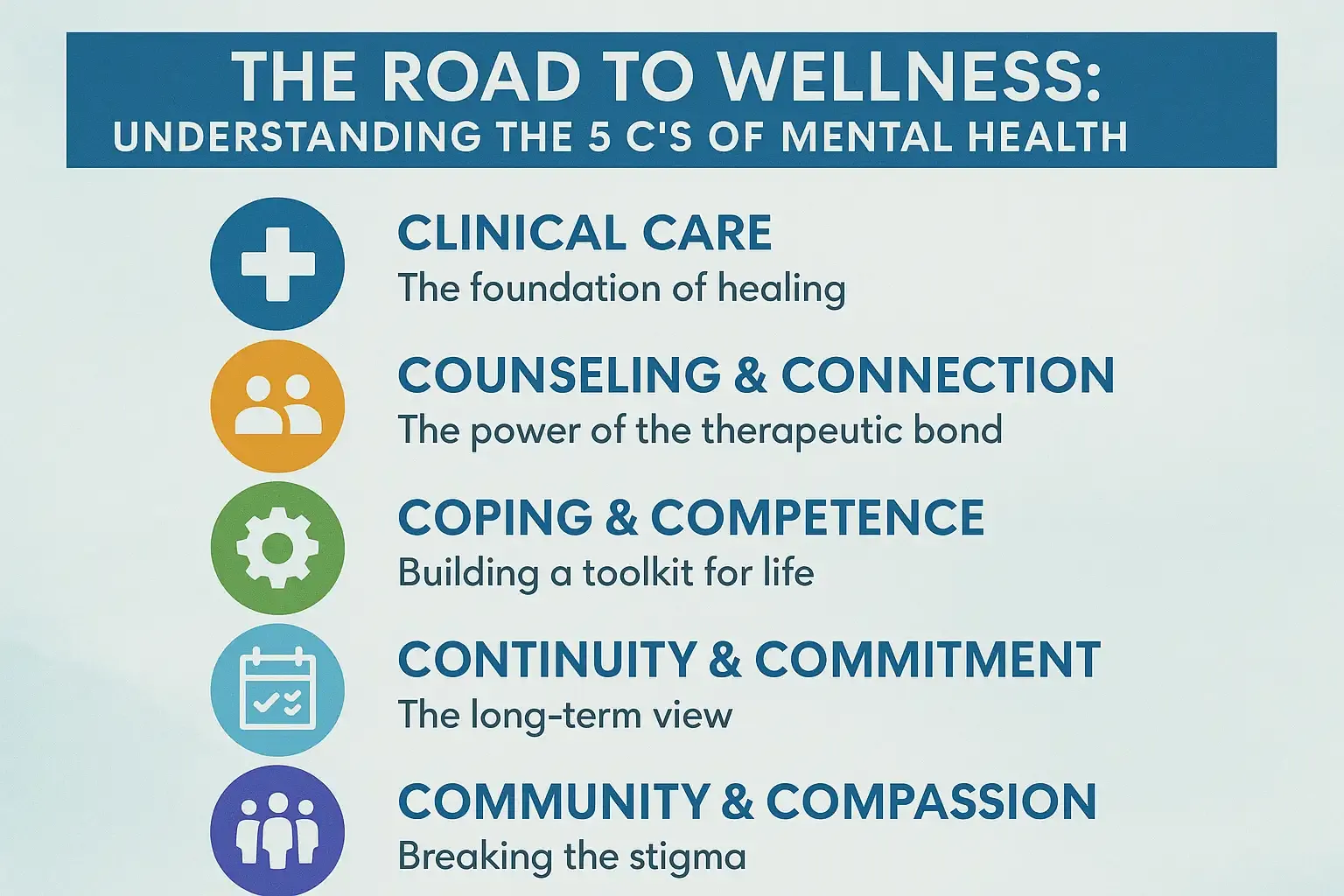
In our fast-paced world, prioritizing mental wellness isn’t a luxury—it’s a fundamental component of a healthy, fulfilling life. While the path to mental clarity can feel overwhelming, we can simplify the journey by focusing on five core principles. These are the 5 C’s of Mental Health, a practical framework for seeking, maintaining, and strengthening your psychological well-being.
At Maryland Behavioral Health, we believe that recovery is a community endeavor built on strong, evidence-based care. These five principles naturally guide individuals toward the clinical options and supportive environment necessary for lasting change.
1. Clinical Care: The Foundation of Healing
The first C is Clinical Care, which is the absolute foundation of professional mental health treatment. Just as you would consult a specialist for a physical ailment, quality mental health requires the expertise of trained professionals. This isn’t just about general support; it’s about psychiatric services that provide precise evaluation, diagnosis, and evidence-based treatment plans.
Clinical care often involves Medication Management, a crucial element for many individuals struggling with mood disorders, anxiety, or psychosis. Under the guidance of a psychiatric care provider, medication can help stabilize chemical imbalances, making it possible for individuals to engage fully in therapy and daily life. This professional, targeted intervention ensures that your treatment is effective and tailored specifically to your unique needs, maximizing your potential for recovery.
2. Counseling & Connection: The Power of the Therapeutic Bond
The second C is Counseling and Connection. The heart of any successful mental health journey is the therapeutic relationship—the genuine, non-judgmental connection you forge with a qualified counselor or therapist. Therapy is a protected space where you can explore challenges, process trauma, and receive guidance from an objective professional.
Whether through individual counseling or specialized formats like an Intensive Outpatient Program (IOP) or Partial Hospitalization Program (PHP) for more intensive support, therapeutic connection is vital. It’s where talk therapy—including modalities like Cognitive Behavioral Therapy (CBT) and Dialectical Behavior Therapy (DBT)—transforms insight into action, helping you understand your mind and behavior. Remember, a deep connection with your therapist is what allows you to feel seen and safe, paving the way for real change.
3. Coping & Competence: Building a Toolkit for Life
The third C is Coping and Competence. Mental wellness isn’t just about reducing symptoms; it’s about developing the inner competence to navigate life’s inevitable stressors using effective coping mechanisms. In therapy, you don’t just talk about your problems—you learn how to solve them.
This phase of the journey focuses on acquiring practical, evidence-based skills. For example, your therapist may help you develop emotional regulation techniques, challenge destructive thought patterns, or improve communication skills. These are the tools that empower you, ensuring that when difficult feelings arise, you are equipped not just to survive, but to manage and thrive. The goal is to move from feeling overwhelmed to feeling competent and in control of your mental landscape.
4. Continuity & Commitment: The Long-Term View
Mental health is not a one-time fix; it’s a lifestyle, and that requires Continuity and Commitment. This fourth C emphasizes the importance of adhering to your treatment plan and showing up for yourself consistently. Treatment success is often determined by the dedication you show to the process—attending sessions, taking medication as prescribed, and practicing coping skills daily.
To support this commitment, integrated services are essential. Programs like a Psychiatric Rehabilitation Program (PRP) help individuals maintain stability in the community by offering services that support vocational, social, and living skills. Furthermore, integrating mental health with physical care, such as utilizing Primary Care services alongside psychiatric treatment, reflects a holistic commitment to the wellness of the whole person. Consistency in care transforms short-term relief into long-term stability.
5. Community & Compassion: Breaking the Stigma
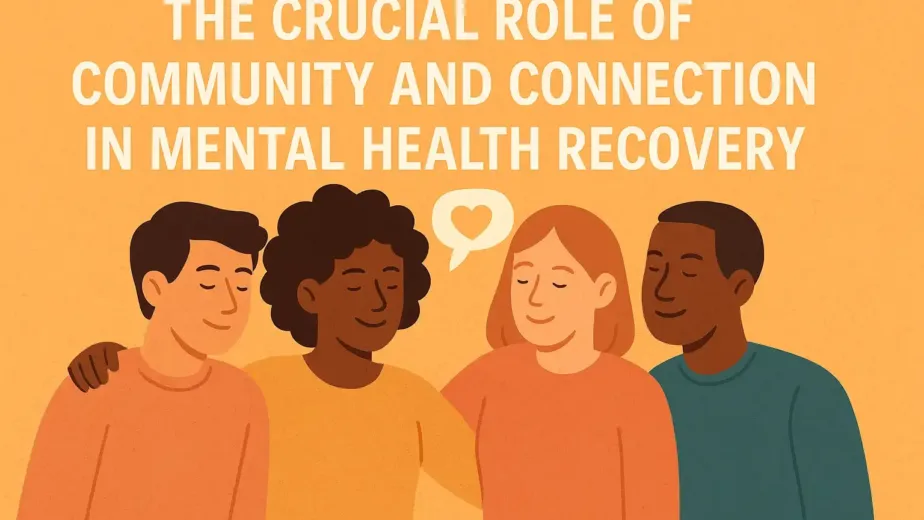
The final C is Community and Compassion. We heal better together. A supportive community network—family, friends, and support groups—provides validation and shared strength. However, compassion starts with you. Practicing self-compassion means treating yourself with the same kindness and understanding you would offer a loved one.
We must also extend compassion outward by helping to break the stigma surrounding mental illness. By making care accessible through options like Telehealth appointments, and accepting various private and public insurances, we strengthen the entire community. When we normalize seeking help, we create an environment where everyone feels safe to take the first step toward a healthier life.
Start Your Journey Today
The 5 C’s—Clinical Care, Counseling & Connection, Coping & Competence, Continuity & Commitment, and Community & Compassion—serve as your roadmap to lasting wellness. If you or a loved one are struggling, remember that seeking professional help is a sign of immense strength. We offer comprehensive psychiatric services, medication management, and therapy tailored to help you navigate this journey.
Reach out to the compassionate and skilled team at Maryland Behavioral Health today. We are here to help you live a happier, healthier, and more productive life.